School Information System

Wisconsin reworking bid to exit federal education mandates

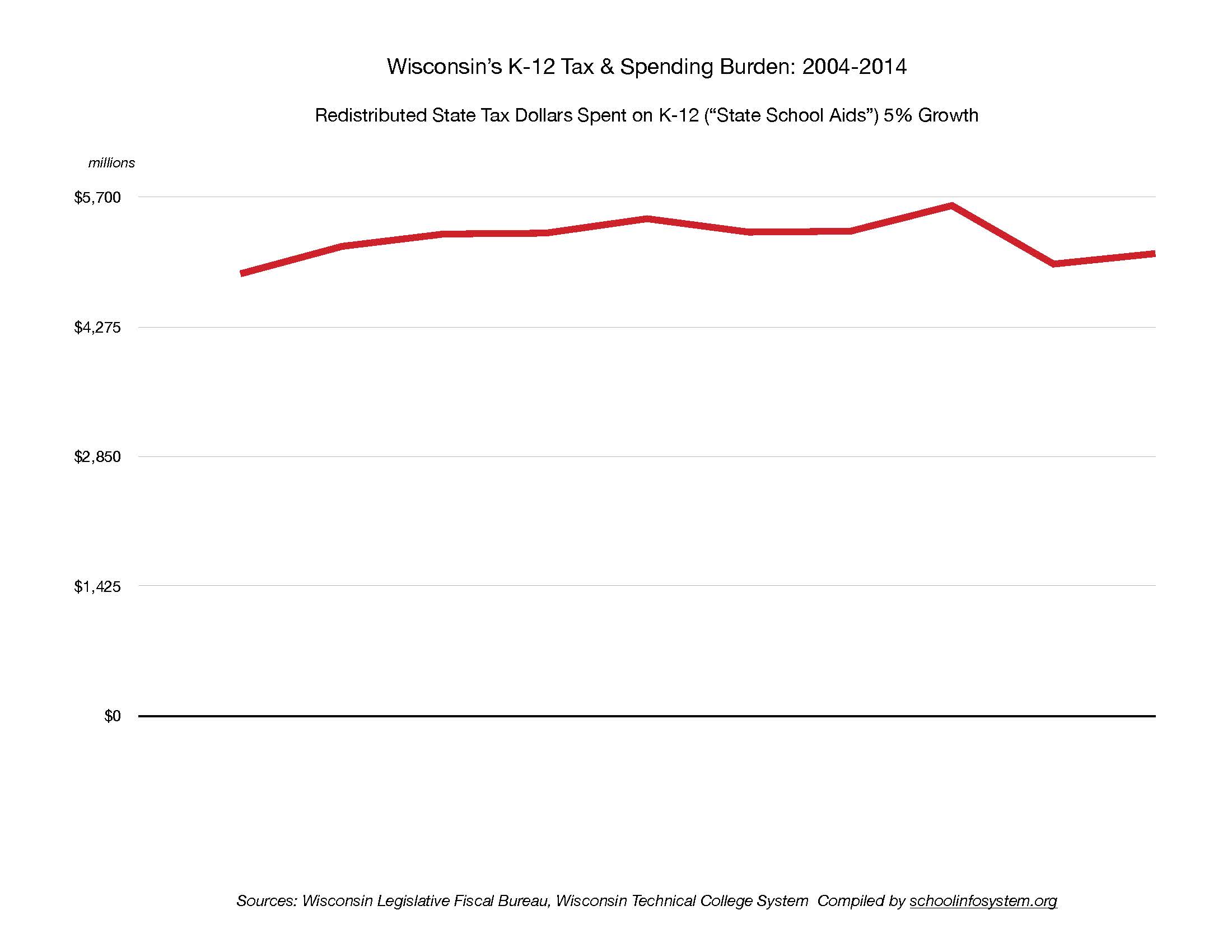
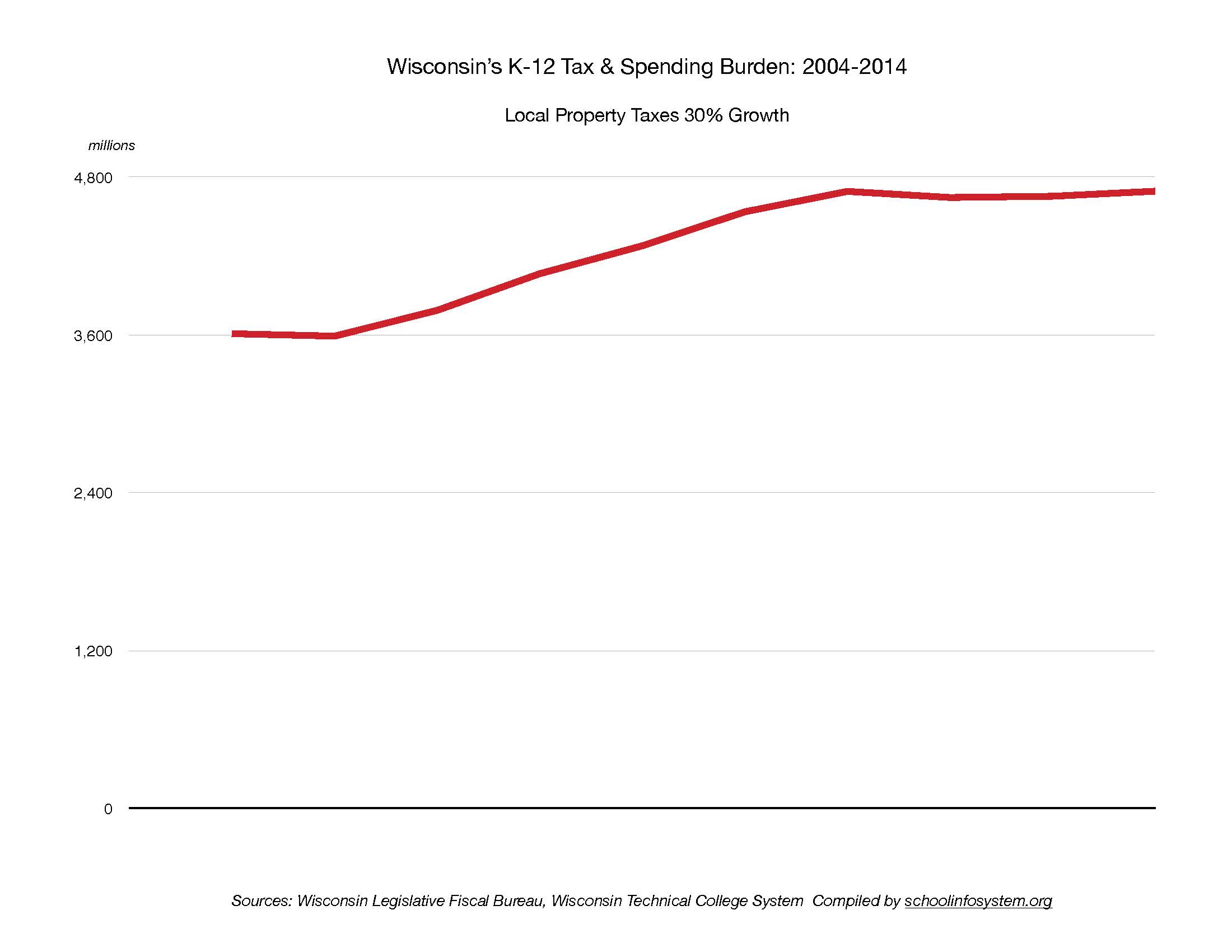
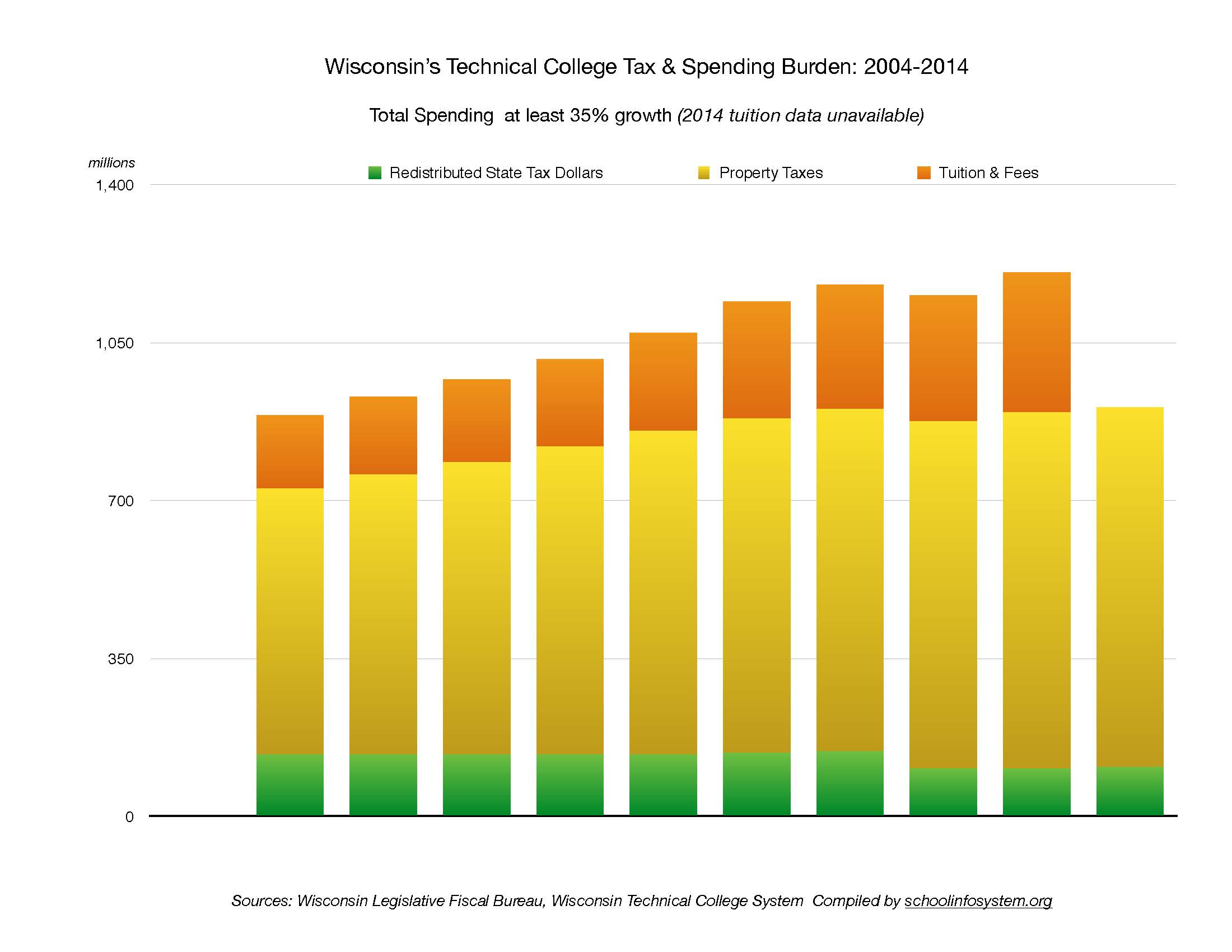
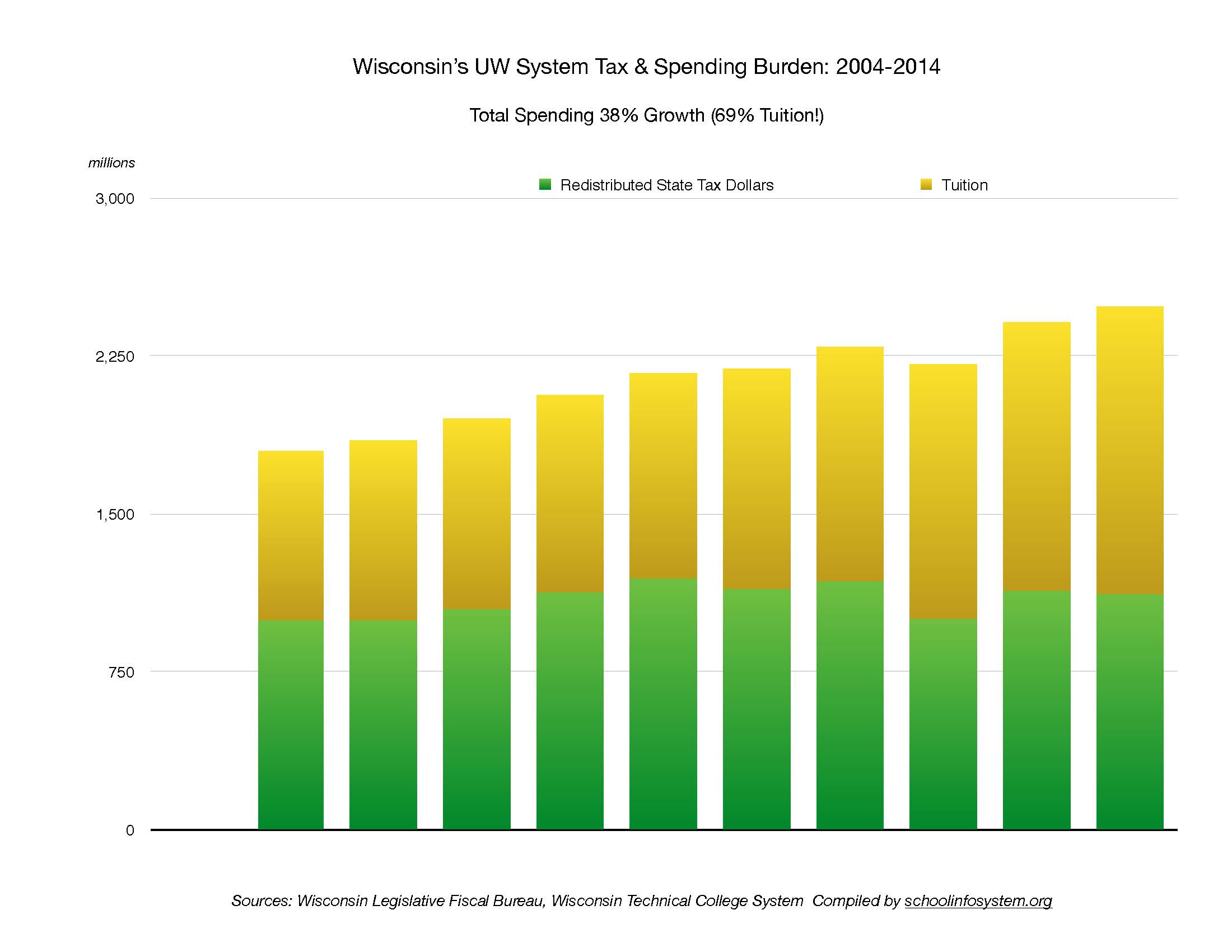
Wisconsin is reworking its application for relief from certain elements of a 10-year-old federal education law, based on feedback received from the U.S. Department of Education last month that outlined where the state’s application was light on details.
A letter from April 17 indicates the state needs a better plan for transitioning to college- and career-ready standards in its schools, and for implementing teacher and principal evaluation and support systems. Wisconsin’s plan also needs ambitious yearly objectives for schools and better criteria for recognizing progress over time in persistently low-performing schools.
State officials on Monday said that the cycle of feedback and revision is normal as states around the country propose new accountability measures for schools that would replace the punitive system under the federal law known as No Child Left Behind.
“This is very, very common,” Lynette Russell, assistant state superintendent for the Wisconsin Department of Public Instruction, said in an interview Monday.

Sen. Luther Olsen, R-Ripon, chairman of the Senate Education Committee, who did not see the letter before the weekend, said it affirmed concerns were raised before the application was submitted that DPI’s proposal for a new accountability system “left not much meat on the bones.”
“Folks thought they would do a cursory, general waiver and get it, and at the end of the day it would be pretty hard to be held accountable for it,” Olsen said. “The (U.S. Education) department is not letting Wisconsin get away with that at all.”
The letter commended Wisconsin for planning for a new common set of standards aligned to college and career readiness, and also for developing a teacher evaluation system based on educator practice and student test scores.
But it criticized the application for not detailing how the state would implement those new systems

State responds to concerns over No Child Left Behind application

Share

1 in 3 autistic young adults lack jobs, education

Associated Press:

One in 3 young adults with autism have no paid job experience, college or technical schooling nearly seven years after high school graduation, a study finds. That’s a poorer showing than those with other disabilities including those who are mentally disabled, the researchers said.
With roughly half a million autistic kids reaching adulthood in the next decade, experts say it’s an issue policymakers urgently need to address.
The study was done well before unemployment peaked from the recession. The situation today is tough even for young adults who don’t have such limitations.

Share

Higher Education & The Data Storm

David Clemens:

Consensus has it that we are living in the Age of Big Data. When our college president was hired, he declared himself “data driven”; during interviews for vice president of academic affairs, all three finalists announced that they, too, were “data driven” (though none could articulate a clear image of what higher education might look like ten years from now). So what does “data driven” mean? Every day, our digital helpmeets dump petabytes of data into our cringing neural pathways. We are besotted with data; we’ve never had so much of the stuff. But to be data driven sounds uncomfortably like Captain Ahab (who was whale driven).
The words “data driven” are gang members; when I hear them, I can be sure the words “outcomes” and “a culture of evidence” are slouching around nearby and will shortly make an appearance. Often, data is announced (as if newly arrived from Mount Sinai) in totals, aggregates, medians, percentages, rates, multipliers–but then the data just piles up in corners and collects under the bed.
Frankly, I don’t have much confidence in data’s probative value. Even though digits and stats supply a comforting sense of measurement, certitude, and solidity, data alone is still the smallest particle of information, no matter how much of it accumulates. Data by itself is inert, like Frankenstein’s monster, patched together and waiting for a lightning bolt. Sometimes it waits a long time. It may seem irrefutable, but until data is analyzed, it just lays there. Remembering Christmas presents from his childhood in Wales, Dylan Thomas recalled receiving “books that told me everything about the wasp, except why.”

Share

123 Page Madison School District Achievement Plan Published

The Madison School District 3.5MB PDF, via a kind reader’s email:

Dear Community Members,
The preliminary plan to eliminate achievement gaps provided a framework around which to engage members of the community in a discussion about what we need to do to address the achievement gaps. To gather input, we held community input sessions, met with community organizations, and talked with our staff. Summaries and an analysis of session feedback are listed in the plan and at mmsd.org/thefuture.
That input served as our guide in developing these recommendations. Then, we also considered educational research, the new federal mandates of the Response to Intervention (RtI) program, cost, and logistics, as well as community input. We reviewed what has worked in our school district, in our community, and in other districts across the country.
I believe that if we are going to do better by our children, we must invest. But I also believe we have a responsibility to balance the needs of our community and leverage resources for the greatest impact on student achievement. The final recommended plan is reduced from a financial perspective. This was done to ensure greater sustainability from a fiscal perspective.
The revised plan maintains the six original areas of focus. These six chapters illustrate the landscape of education today – areas that are critical to closing achievement gaps. They also represent areas where leverage exists to eliminate our achievement gaps. Any successful plan to close student achievement gaps must employ a combination of strategies. If there were one simple answer, it would have been employed a long time ago and replicated in districts across the country. Our reality calls for many solutions at many levels of the organization. Our problem is a complex one. Our solutions must be equally complex in their approach.
The good news is that research on what works has been going on for years. Although there is no one right way to teach all students, the research is solid on increasing student performance through an aligned curriculum, effective instruction, frequent monitoring of progress, research-based decision making before a child experiences failure, having interventions in place to help learners, and involving the entire community in support of children.
To address this last point, this plan also asks for a commitment from the community to join MMSD using elements of the Strive Model (Kania, John and Kramer, Mark. (2011). “Collective impact.” Stanford Social Innovation Review, Winter 2011) to develop a network which links services to schools through a collaborative district approach as well a school-based grass roots “community school model” approach based on each school’s need. This concept is elaborated where appropriate in each chapter and in the conclusion of this document.
The recommendations within this plan focus on academic rigor, expectations, accountability, response to behaviors, professional development, cultural competence,3 parents as partners, hiring for diversity, and establishing a new relationship with our community. It also is a plan that supports the federal mandates of Response to Intervention (RtI), which is the practice of providing high-quality instruction, interventions, and progress monitoring which is matched to student needs to make decisions about changes in instruction, and analyzing student response data decisions through collaboration.
These final recommendations reflect some effective work already under way that needs additional focus in order to meet student needs and RtI requirements, some promising practices, and some new ideas. These recommendations are all based on research and are a call to action to our staff, our families, and our community.
Some recommendations from the preliminary plan have been made more cost effective, and others have been elaborated upon. The following items are either new, have been eliminated, or have been revised to allow further planning during the 2012-13 school year:
New Initiative: Ensure all K-12 Students Demonstrate Proficiency in the Standards for Mathematics Practice
New Initiative: Drop-Out Recovery
New Initiative: Increase Options for Restorative Practices in the MMSD Student Conduct and Discipline Plan
Eliminated: PEOPLE Program for Elementary Students Eliminated: Youth Court Expansion to Middle School
Eliminated: Implement 21st Century Community Learning Centers in the Highest Need Elementary Schools
Eliminated: Professional Development – Technology Coach
Eliminated: Collaborate with the Community to Implement the Parent-Child Home Program
Further Planning: Extend the School Day
This final recommended plan, Building our Future, was developed to eliminate our achievement gaps. As a school district, we know we need to take new action. We also know we must work with you, members of this great community, to better address the needs of our children. We now look forward to discussing this final proposed plan with the Board of Education. Let’s work together to make a difference for our children.
Sincerely,
Daniel A. Nerad, Superintendent

Pages 117 to 123 describe the baseline metrics.
Matthew DeFour has more.

Share

Why Is Mathalicious Raising Money on Kickstarter?

Audrey Watters:

Mathalicious is currently raising $164,000 to create a series of math videos – 52 in all as the project name suggests. That’s one math video a week, along with a teacher’s guide on how the videos can be incorporated into lessons. The videos will follow the approach of the rest of Mathalicious mission: show students how math helps you understand the world around you. I don’t mean “two trains leave the station” kind of story problems either. I mean problems that are interesting and relevant to students and that teach basic math concepts (Common Core State Standards-aligned) as well as broader problem solving and critical thinking skills. A sample lesson on probability: Does “Bankrupt” come up more often than it should on Wheel of Fortune? Is the show rigged?
$164,000 is sizable goal for a Kickstarter project; the average project seeks under $10,000. But there have been some fairly incredible success stories with Kickstarter as of late. Musician Amanda Palmer raised her goal of $100,000 for her latest record and tour in just 6 hours (she’s now raised over $600,000 with 21 days still to go). 5 projects so far this year have raised over $1 million, and when its campaign ends on May 18, the Pebble E-Paper Watch will have set the new Kickstarter record, with over $10 million raised. The original ask: $100,000.

Share

Devaluing value-added assessments

Jay Matthews:

I don’t spend much time debunking our most powerful educational fad: value-added assessments to rate teachers. My colleague Valerie Strauss eviscerates value-added several times a week on her Answer Sheet blog with the verve of a samurai, so who needs me?
Unfortunately, value-added is still growing in every corner of our nation, including D.C. schools, despite all that torn flesh and missing pieces. It’s like those monsters lumbering through this year’s action films. We’ve got to stop them! Let me fling my small, aged body in their way with the best argument against value-added I have seen in some time.
It comes from education analyst and teacher trainer Grant Wiggins and his “Granted, but . . .” blog. He starts with the reasons many people, including him and me, like the idea of value-added. Why not rate teachers by how much their students improve over time? In theory, this allows us to judge teachers in low- and high-income schools fairly, instead of declaring, as we tend to do, that the teachers in rich neighborhoods are better than those in poor neighborhoods because their students’ test scores are higher.

Much more on “value added assessment“, here.

Share

Obama’s education policies will wreak havoc on CA schools

Richard Rider:

In an op-ed featured in Flashreport, Lance Izumi discussed what will happen to California’s educational system now that it has agreed to replace its own rigorous state student-learning standards with the comparatively less difficult national standards supported by the Obama administration. Will courses and curriculum change? How will testing of students be affected? Will the effort to reform teacher evaluation be derailed? So far, the answers to these questions are not promising.
The Obama administration required states to adopt the national “Common Core” standards as a condition for competing for federal “Race to the Top” grants and for receiving waivers from penalties for failing to comply with the student-achievement requirements of the No Child Left Behind law.

Share

Carnival of Mathematics 86

Brent Yorgey:

Welcome to the 86th Carnival of Mathematics! is semiprime, nontotient, and noncototient. It is also happy since and . In fact, it is the smallest happy, nontotient semiprime (the only smaller happy nontotient is 68–which is, of course, 86 in reverse–but 68 is not semiprime).
However, the most interesting mathematical fact about 86 (in my opinion) is that it is the largest known integer for which the decimal expansion of contains no zeros! In particular, . Although no one has proved it is the largest such , every up to (which is quite a lot, although still slightly less than the total number of integers) has been checked to contain at least one zero. The probability that any larger power of 2 contains no zeros is vanishingly small, given some reasonable assumptions about the distribution of digits in base-ten expansions of powers of two.

Share

Dysfunction: A Case Study

Charlie Mas:

As we piece together the history of the recent proposal to revise the Transportation Standards, it reveals a story of deception, misinformation, abdication of responsibility, and, more than anything else, hypocrisy.
The Board will vote on Wednesday evening on a revised set of Transportation Standards for 2012-2013. We can’t say what those revised standards will be exactly – they have yet to release the final version. They will undoubtedly vote to approve – they always do. But what will they approve? Even they don’t know. This comes after the Board already adopted transportation standards for the coming school year. How did we get here? It’s an ugly, ugly story.

Share

Teachers as Policymakers?

Scott Joftus:

Should teachers be setting educational policy? Based on the comments to my recent article for Education Next, the answer is a resounding “yes!” My response is a bit more nuanced: It might be worth a try, although scaling any successes would be challenging.
In the article, I acknowledged the tension between my role as education consultant and “policy wonk,” on the one hand, and my role as a father of two girls in (a very good) public elementary school, on the other. For example, as a consultant, I help schools implement positive behavioral interventions and supports for disruptive students, but, as a parent, I find myself wishing disruptive students would simply be removed from my daughters’ classroom. This tension is hardly unique to education: Consider the well-meaning environmentalist who lives in a large home and drives an SUV.

Share

K-12 Tax & Spending Climate: California deficit has soared to $16 billion, Gov. Jerry Brown says

PolitiCal:

Gov. Jerry Brown announced on Saturday that the state’s deficit has ballooned to $16 billion, a huge increase over his $9.2-billion estimate in January.
The bigger deficit is a significant setback for California, which has struggled to turn the page on a devastating budget crisis. Brown, who announced the deficit on YouTube, is expected to outline his full budget proposal on Monday in Sacramento.
“This means we will have to go much further, and make cuts far greater, than I asked for at the beginning of the year,” Brown said in the video.

Share

From big-city superintendent to supporter of vouchers and charters – Arlene Ackerman, podcastED

Ron Matus:

Last fall, Arlene Ackerman, the former schools superintendent in Philadelphia, made a stunning announcement for someone of her status. In a newspaper op-ed, she forcefully came out in favor of expanded school choice options, including more charter schools and yes, even vouchers. “I’ve come to a sad realization,” she wrote. “Real reform will never come from within the system.”
In this redefinED podcast, Ackerman talks more about her evolution.
For years, she pushed change from the highest perches in K-12 education. Before Philly, she headed the school districts in Washington D.C. and San Francisco. She led the latter when it became a finalist for the prestigious Broad Prize, annually awarded to the best urban school district in the country, in 2005. But the kinds of sweeping reform needed to help poor and minority kids, she said, too often met with resistance from unions, politicians, vendors and others who benefited from not budging.

Share

Preparing Urban Students to Succeed in College – Dayton, OH

Meagan Pant:

This just in from the University of Dayton
The Dayton Early College Academy — on the University of Dayton campus — received a bronze medal from U.S. News & World Report in its annual ranking of America’s Best High Schools, released May 11.
The report analyzed academic and enrollment data from nearly 22,000 public high schools to find the best in the nation. A total of 4,850 schools received recognition in gold, silver and bronze categories.
DECA is one of four early college high schools in Ohio to receive recognition.
The University of Dayton founded DECA in 2003 in partnership with Dayton Public Schools with the singular focus of preparing urban students to succeed in college.

Share

The Murky Ethics (and Crystal-Clear Economics) of the Unpaid Internship

Derek Thompson:

My name is Derek, and I was an unpaid intern.
I begin with a confession, because the unpaid internship has become something of a dishonor, if not a scandal. And, as New York Times reporter Steven Greenhouse wrote in his blockbuster take-down of the institution in 2010, I might have helped various companies conspire to break the law — even if it’s the murkiest, most broken law in the country.
Of the 10 million students at four-year colleges in the U.S., more than 75% have at least one internship before graduating. We don’t know how many of those internships are unpaid, but Ross Perlin, the author of Intern Nation, estimates that it’s up to one-third. “It’s the only major category of work that I know of that is not tracked at all by the Bureau of Labor Statistics,” Perlin said.

Share

Education reform action needed now

Michelle Rhee:

November is nearing, and around the country candidates are courting voters. But, if they really want to connect with the men and women they hope to represent, they should start speaking up about a topic Americans care deeply about but which is being ignored.
A recent poll by the College Board showed more than two-thirds of voters call education an issue that is “extremely important” to them in the 2012 election. Only jobs and the economy are viewed with more urgency, and large majorities of voters see education and job creation as inextricably linked.

Share

College Credit Without College

Paul Fain:

The Internet takes college courses out of the classroom. But prior learning assessment takes college outside of college.
The practice of granting college credit for learning and knowledge gained outside the traditional academic setting goes back decades, with roots in the G.I. Bill and World War II veterans who earned credits for military training.
But prior learning assessment mostly occurs behind the scenes, partially because colleges avoid loudly advertising that they believe college-level learning can occur before a student ever interacts with faculty members.
That low profile is ending, however, as prior learning is poised to break into the mainstream in a big way. The national college completion push and the expanding adult student market are driving the growth. And ramping up to meet this demand are two of the field’s early adopters — the Council for Adult and Experiential Learning and the American Council of Education — which may soon be even bigger players in determining what counts for college credit.

Share

The Language Wars: A History of Proper English by Henry Hitchings

Christopher Howse:

John Kemble was the great actor of his generation, the next one on from Garrick. Some critics found they could not think of Hamlet without hearing Kemble in their mind’s ear.

Share

(in)Flexibility for Madison’s Next Superintendent?

The Madison School District Administration (PDF).
Two year administrator contracts have been the norm for some time – matching the term and perhaps benefits of the teacher union contracts. The composition of future teacher arrangements (more) may change in Madison, or not. Should the new Superintendent have flexibility in staffing?
What are the student achievement implications of continuing this “status quo” or “same service” practice? Perhaps the District’s long standing reading problems are a place to think differently.
UPDATE, via several kind readers:
I compared Madison’s proposed Administrator contract hours (PDF) with Sun Prairie’s HR document and Waunakee’s HR guidelines. The result is the chart below:


I’ve emailed the local school board seeking additional information and will post if and when I receive a response. Perhaps summer and vacation days are different between the Districts? Or, not.

Share

Madison West team wins championship at Team America Rocketry Challenge

Dee Hall:

A team from Madison West High School blew away its rivals Saturday, winning first place — and a free trip to London — in the Team America Rocketry Challenge.
The four-member team beat 99 others in the finals at the national competition held in The Plains, Va. The winning team gets an expenses-paid trip to London courtesy of Raytheon Company to compete in the July 15 Farnborough International Air Show.
Contestants must design, build and launch a rocket that reaches exactly 800 feet during a 43- to 47-second flight. The payload, two raw eggs, must parachute to the ground undamaged.
The West team earned a score of 12; a perfect score is zero. The next lowest score was 22. Two other West teams competed Saturday, with one placing 16th and the other 75th.

Share

Can the Colleges Be Saved?

Anthony Grafton:

Many years ago I asked Otto Neugebauer, a pioneering historian of mathematics and astronomy in the ancient world, about his education in pre-World War I Austria. Neugebauer was known both for his comprehensive histories and for his editions and interpretations of very difficult texts–mathematical and astronomical tables and horoscopes, preserved on cuneiform tablets, in Greek papyri and Latin manuscripts, and in many other sources and traditions. (Late in life, Neugebauer mastered Ethiopic and wrote penetrating work on Ethiopian astronomy and calendrics.)
I expected him to say something warm about his teachers at gymnasium, along the lines of the memoir in which another great émigré scholar, Erwin Panofsky, described the “lovable pedant” who taught him Greek in Berlin (this gentleman reproached himself in class for failing to notice a misplaced comma in a Greek text, since he himself had written an article on that very comma long before). Instead, Neugebauer told me that he had hated his secondary school. He received his diploma, he explained, only because he volunteered for the army, which led to several years of service in the artillery on the Italian front. And he did not begin to work at a high level until he went to university after the war.

Share

Parents understand an ‘A,’ but what about a ‘yellow’ on a school report card?

Dave Murray:

Parents might know what an A means when they see it on a report card, but what if their school was graded “blue?”
The state Education Department is backing away from its plan to grade schools using three colors — red, yellow and green — to one that would use five colors, saying it would be more helpful to parents.
But several education advocacy groups say the new plan is better than the “traffic light,” but still falls short of a report card system they said works well in other states and gives parents a clear indication of a school’s progress.
“We’re glad to hear about the five categories — a big improvement for the new public reporting system,” said Amber Arellano, executive director of the Education Trust -Midwest. “We still think parents intuitively understand an A to F system better than a color system. For example, what does “yellow” mean to a parent in terms of school quality?”

Madison adopted a “standards-based” report card for middle schools several years ago. Unfortunately, it was not, at the time, compatible with the then new “infinite campus” system. Has this changed?

Share

Hong Kong Textbook Talks Collapse

Dennis Chong and Colleen Lee:

It is the latest development in a long-running dispute over the bundling of teaching aids – such as manuals and CD-ROMs – with textbooks, which parents and the government say is pushing up prices.
Last year, the Education Bureau imposed a ban on publishers giving schools “free” teaching materials while adding their cost to the prices students paid for the corresponding textbooks.
But on Monday, Suen said schools should get free basic manuals for teachers in an effort to “streamline” the policy, though they not accept free CDs, statistical databases or practice exam questions, which were more expensive.

Share

Teaching Me About Teaching

Charles Blow:

Next week is National Teacher Appreciation Week, and, as far as I’m concerned, they don’t get nearly enough.
On Tuesday, the United States Department of Education is hoping that people will take to Facebook and Twitter to thank a teacher who has made a difference in their lives. I want to contribute to that effort. And I plan to thank a teacher who never taught me in a classroom but taught me what it meant to be an educator: my mother.
She worked in her local school system for 34 years before retiring. Then she volunteered at a school in her district until, at age 67, she won a seat on her local school board. Education is in her blood.
Through her I saw up close that teaching is one of those jobs you do with the whole of you — trying to break through to a young mind can break your heart. My mother cared about her students like they were her own children. I guess that’s why so many of them dispensed with “Mrs. Blow” and just called her Mama.

Share

Teacher evaluation: What it should look like

Valerie Strauss:

A new report from Stanford University researcher Linda Darling-Hammond details what the components of a comprehensive teacher evaluation system should look like at a time when such assessments have become one of the most contentious debates in education today.
Much of the controversy swirls around the growing trend of using students’ standardized test scores over time to help assess teacher effectiveness.
This “value-added” method of assessment — which involves the use of complicated formulas that supposedly evaluate how much “value” a teacher adds to a student’s achievement — is considered unreliable and not valid by many experts, though school reformers have glommed onto it with great zeal.
Any reader of this blog will have seen numerous pieces from educators, mathematicians and others explaining why this method is unfair, as well as pieces on what does work in teacher evaluation.

Share

DNA sequencing of sick children reinforces Wisconsin work

Mark Johnson:

Researchers at Duke University have given a powerful new demonstration of the gene sequencing technique used successfully in Wisconsin to diagnose and treat Nic Volker, the young boy from Monona who suffered from a never-before-seen intestinal disease.
The team at Duke worked for more than two years, sequencing a dozen children with different unknown diseases. By sequencing all of their genes, researchers were able to reach a likely genetic diagnosis for half of the children, according to work detailed in the Journal of Medical Genetics.
The Duke study bolsters what Nic’s doctors at the Medical College of Wisconsin and Children’s Hospital of Wisconsin have been saying since his landmark case in 2009: The sequencing of our genetic script can solve the riddle of some unknown illnesses, giving hope to families who have spent thousands of dollars and sought numerous medical opinions without success.
“I am absolutely convinced that in the setting of undiagnosed illnesses in children it is incumbent on the health care system to provide this kind of sequencing,” said David B. Goldstein, a professor of genetics at the Duke University School of Medicine, who worked on the new study.

Share

Schooling, Income, and Reverse Causation

Bryan Caplan:

Economists normally measure the private return to education by estimating a “Micro-Mincer” regression:
(1) log(personal income in $s)= a + b1*(individual education in years)
Given crucial assumptions, b1 is the private return to education. I’ve discussed some of these crucial assumptions elsewhere. One that I’ve neglected, though, is the possibility of reverse causation. Maybe higher income (or the expectation of higher income) leads to more education in the same way that higher income leads to more plasma TVs: you buy not as a prudent investment, but because the money’s burning a hole in your pocket. If so, b1 overestimates education’s private rate of return.
Now you could object that personal income has little effect on educational attainment because individuals pay only a tiny fraction of the bill. If your income suddenly doubled, how many extra years of education would you get in response? An average answer of “one year” seems pretty high, suggesting an extremely small income–>education effect.*

Share

Education needs bipartisan effort

Rep. Joe Courtney:

In the midst of the most desperate threat to our nation, President Abraham Lincoln looked beyond the dire present of the Civil War and signed a groundbreaking national commitment to higher education. On July 2, 1862, the Morrill Act created the land-grant system for state educational institutions to foster engineering and agricultural science.
From coast to coast — from the University of Florida to the University of Alaska — every state has benefited from Lincoln’s foresight and a supportive, bipartisan group of legislators. For generations, that was how Washington looked on higher education.

Share

For Most Graduates, Grueling Job Hunt Awaits

Lauren Weber & Melissa Korn:

A survey of employers by the National Association of Colleges and Employers showed those that recruit on campuses plan to boost hiring of new grads by 10.2% from last year. However, on-campus recruiting is only a small slice of the pie–the bulk of graduates find jobs on their own.
In a study to be released Thursday, the John J. Heldrich Center for Workforce Development at Rutgers University found that recent graduates are taking awhile to find work. Only 49% of graduates from the classes of 2009 to 2011 had found a full-time job within a year of finishing school, compared with 73% for students who graduated in the three years prior.

Share

Chinese Students Get IV Drips While Studying for Gaokao Exam

chinasmack:

Do you remember our past reports of Chinese students buried under their books or throwing out their books and notes to relieve stress as China’s annual Gaokao national college entrance examinations approach?

Share

Prom: An Intimate Look at an American Rite of Passage

The Washington Post.Photos.

Share

Madison Memorial High School UW System Freshman Enrollment 1983-2011


From time to time, friends have pondered the path of Madison area students after graduation. I’ve begun to compile Freshman enrollment data from the UW-Madison and UW-System. These charts illustrate Madison Memorial High School graduates first year UW enrollment from 1983 to 2011. This is of course, just part of the picture. I hope to address other paths over the next few months.
Madison Memorial’s senior class enrollment in the year prior to UW System enrollment was 543(2005-2006) 496(2006-2007) 503(2007-2008) 452(2008-2009) 444(2009-2010) 435(2010-2011)

Share

Madison LaFollette High School UW System Freshman Enrollment 1983-2011


From time to time, friends have pondered the path of Madison area students after graduation. I’ve begun to compile Freshman enrollment data from the UW-Madison and UW-System. These charts illustrate Madison LaFollette High School graduates first year UW enrollment from 1983 to 2011. This is of course, just part of the picture. I hope to address other paths over the next few months.
Madison LaFollette’s senior class enrollment in the year prior to UW System enrollment was 425(2005-2006) 366(2006-2007) 421(2007-2008) 404(2008-2009) 374(2009-2010) 389(2010-2011)

Share

Madison Edgewood High School UW System Freshman Enrollment 1983-2011


From time to time, friends have pondered the path of Madison area students after graduation. I’ve begun to compile Freshman enrollment data from the UW-Madison and UW-System. These charts illustrate Madison Edgewood High School graduates first year UW enrollment from 1983 to 2011. This is of course, just part of the picture. I hope to address other paths over the next few months.
Madison Edgewood’s total enrollment, according to its website is currently 650 students.

Share

How the technology works in Calculus 2

Robert Talbert:

Today we started the spring term, 6-week Calculus 2 class that I’ve been writing about for the last few days. We had a good time today, getting comfortable with each other and doing some review of the basics of the definite integral. Before we get too far into the term, I wanted to outline the technology infrastructure of the course.
For a long time, I’d used the learning management system (LMS) of my institution as the basic technology for the course, and everything else kind of fit around the LMS. At GVSU the default LMS is Blackboard. But I decided after used Blackboard this past year that we have irreconcilable differences. I don’t ask much from my LMS; I mainly use it to archive files, provide a link to a central calendar, post grades, and to make announcements. I don’t need all the dozens of other features Blackboard offers, and the profusion of features in Blackboard tends to make it a mile wide and an inch deep, with the basic functions needed for a class (email, file hosting, gradebook) kludgy and difficult. So I decided to make a break with Blackboard and strike out on my own.

Share

Opinions differ on Watertown’s standing in Maclver report

Jen Zettel:

Of the state’s 50 largest school districts, the Watertown Unified School District ranked 48th, ahead only of Racine and Milwaukee, according to a recent report by the MacIver Institute. However, some education researchers said the report doesn’t tell the whole story.
The report took the 50 largest school districts in Wisconsin and compared them based on factors such as performance on the Wisconsin Concepts Knowledge Examination (WKCE), ACT test scores and participation, Advanced Placement scores and participation, graduation rate, students eligible for free or reduced price lunch and students enrolled in English Language Learners programs.
The top five districts were Elmbrook, Marshfield Unified, New Berlin, Verona Area and Middleton-Cross Plains Area. The bottom five were Kaukauna Area, Superior, Watertown Unified, Racine Unified and Milwaukee.
The report ranked Watertown 41st in student achievement, 46th in student attainment and 24th in student population affect on performance, for an overall grade of D- and rank of 48.

Share

The linked burdens of obesity and diabetes

esri maps:

Fact 1: Close to a third of U.S. adults are obese. Fact 2: Almost 90% of people with newly-diagnosed type 2 diabetes are overweight. County maps reflect the close links between these key public health challenges.
Click on a county and move the slider bar to compare obesity and diabetes statistics.

Share

Students & Citizens

Tatiana Pina via a kind reader’s email:

The House Chamber and State House corridors filled up Monday with 150 students from Providence schools who came to pitch ideas for making their city a better place to live.
The ideas included tackling environmental safety, gang violence, prostitution, NECAP testing and teenage obesity.
The presentations were part of school partnerships with Generation Citizen, a program founded in 2008 by Scott Warren, then a Brown University senior. Education Commissioner Deborah Gist, Mayor Angel Taveras, Rep. David N. Cicilline and Warren attended the event.

Angel Taveras

While I have been mayor of Providence over the last 15 months, our city has made tough choices to position Providence for progress and improve our city’s economic, educational and political outlook.
We have taken the difficult steps to make structural reforms to our pension system that protect the system for current workers and our retirees. We have taken significant strides to improve our public schools, and have convened a Children and Youth Cabinet that has made concrete and strategic suggestions for reform.

Share

Move to Outsource Teacher Licensing Process Draws Protest

Michael Winerip:

The idea that a handful of college instructors and student teachers in the school of education at the University of Massachusetts could slow the corporatization of public education in America is both quaint and ridiculous.
Sixty-seven of the 68 students studying to be teachers at the middle and high school levels at the Amherst campus are protesting a new national licensure procedure being developed by Stanford University with the education company Pearson.
The UMass students say that their professors and the classroom teachers who observe them for six months in real school settings can do a better job judging their skills than a corporation that has never seen them.
They have refused to send Pearson two 10-minute videos of themselves teaching, as well as a 40-page take-home test, requirements of an assessment that will soon be necessary for licensure in several states.
“This is something complex and we don’t like seeing it taken out of human hands,” said Barbara Madeloni, who runs the university’s high school teacher training program. “We are putting a stick in the gears.”

Share

Number of Retiring California Teachers Dropped 10%

Mike Antonucci:

. The financial health of the California State Teachers’ Retirement System (CalSTRS) is much in the news these days, and that health is intertwined with the upcoming ballot initiative campaign to raise income and sales taxes in the state. So it’s worth noting that the number of California public school teachers who retired in 2011 declined for the first time in five years, and by a hefty 10 percent.
The median retirement age is also climbing, from 61.2 in 2001 to 61.9 in 2011. California teachers are vested after five years, and can retire as early as age 55. Those retiring in 2011 had fewer median years of service (25.5) than any previous group of retirees in the last 10 years.
The good news for CalSTRS and the state budget is that with fewer years of service, the average 2011 retiree received less of a payout than the 2010 retiree ($168 per month less). The bad news is that the good news only postpones the inevitable. CalSTRS currently pays benefits to some 253,000 retired teachers and surviving family members. There are more than 603,000 teachers who still work or have worked in the public schools and will be eligible for pensions when they retire.

Share

Education reform passes Iowa House and Senate

Jason Noble:

Beginning in the 2016-17 school year, the parents of students who cannot demonstrate adequate literacy skills at the end of third grade will be given a choice: enroll their children in an intensive reading program over the summer or have them repeat the grade.
The element of parental involvement and choice was a key concession, said Sen. Herman Quirmbach, D-Ames and the Senate’s lead negotiator on the bill.
But even as lawmakers found compromise on the policy for early-grade literacy, they were unable to agree on funding for it.
Chambers and Quirmbach confirmed on Tuesday that the Legislature would not appropriate any funds for enhanced early-grade literacy efforts in next year’s budget. Under the language of the bill, then, school districts will not be required to implement the additional efforts until the state provides additional dollars to fund them.

Share

For Prom, Don’t Worry About the Date, Think of the Ride

Sue Shellenbarger:

Eighteen-year-old Nick Wilckens and his five friends want to arrive in style at their senior prom next week. Instead of a predictable black limousine, they plan to clang to the curb in a vintage firetruck. “We’re going to be the people who are remembered,” Mr. Wilckens says.
His friend, Jared Kosmala, 18, adds, “We want to spray people with hoses. But I don’t know if that’s going to happen.”
In Racine, Wis., where Mr. Wilckens and his friends live, students have a 60-year tradition of taking oddball transportation to the city’s big prom party, from homemade parade floats to vintage hearses.
Dina Davis made history in 1987 by arriving with her date on a baby elephant named Louella. “I’m just a normal girl, but I had a crazy prom night,” says Ms. Davis of Shorewood, Wis., who works in sales for a food company. Her date borrowed the elephant from a petting zoo where he worked, Ms. Davis says. “Nobody will ever beat it.”

Share

Getting a Bigger Financial-Aid Offer

Charles Passy:

It’s that terrifying time for seniors — high school seniors, that is: the nail-biting moment when millions of them find out whether they’ve been accepted or rejected by their college of choice. But if that in-or-out verdict appears final, there’s another one that’s anything but definitive — namely, a college’s offer of financial help to parent and child.
At a time when demand for college aid is soaring — applications for federal assistance have increased by 59 percent since 2006 — 07, according to the U.S. Department of Education and FinAid.org — appeals of award packages are also on the rise. Some colleges say requests for reconsideration are up as much as 30 percent over the past three years; this is forcing administrators to enter into sensitive financial negotiations and even renegotiations (yes, you can appeal an appeal). And the back-and-forth involves not just newly accepted students but also those at the tail end of their campus experience.

Share

Milwaukee superintendent seeks to bring arts back into schools

Erica Breunlin:

The brightly colored walls of La Escuela Fratney Elementary School in Milwaukee used to reverberate the sounds of laughter and chatter as students painted their masterpieces and crafted pottery.
Today the art room echoes nothing but silence as it has stood nearly vacant all school year. In a year of budget cuts, La Escuela Fratney had to let go of its art teacher for the 2012-’13 school year, and with her, what MPS parent Jasmine Alindar describes as the “soul of the school.”
“She was and still is a very beloved member of the school community,” Alindar said. “So it was a really hard blow.”
Alindar, whose fifth-grade daughter, Alice, has attended La Escuela Fratney since first grade, said the elementary school also lacks specialized music and physical education teachers and has never offered courses in these subjects while her daughter has been enrolled.
La Escuela Fratney isn’t alone in Milwaukee Public Schools. Eighty-seven of 175 schools – many of them elementary schools – no longer have specialized teachers for art, music or physical education.

Related: 2012 WSMA State Festival Madison Area High School Student Event Counts

Share

2011 NAEP: Calif. students rank 47th in science

Fermin Leal:

bout 22 percent of California’s eighth-graders tested on a national science test passed, ranking the Golden State among the worst in the nation, according to figures released Thursday.
Scores from the 2011 National Assessment of Educational Progress, also known as the Nation’s Report Card, show that too few students have the skills that could lead to careers in the field, educators said.
Nationally, 31 percent of eighth-graders who were tested scored proficient or advanced. Both the national and state scores improved slightly over scores from two years ago, the last time the test was administered.

2011 NAEP Science results (3.3MB PDF).

Share

Teachers are Heroes [Infographic]


via a kind Sarah Fudin email. More about Sarah @ 2tor.com:

Sarah joined 2tor in January 2010 as a 2tern (a term she coined to replace intern), and shortly thereafter became a Student Support Advisor for the MAT@USC program. Sarah most recently joined the marketing team in New York City where she works on a variety of projects across all of the company’s programs. Sarah is a 2009 graduate of Lehigh University where she earned her Bachelors in Business and Economics with a focus in Marketing. While at Lehigh, Sarah was a proud Mountain Hawk and captained the varsity lacrosse team. Sarah enjoys running and arts and crafts.

Share

New Orleans Urban League College Track Graduation Event Tonight


via a kind email.
Perhaps, one day, Madison will take bold steps to address its reading (more) and math challenges. The recent rejection of the proposed Madison Preparatory IB charter school proposal illustrates how far our community must travel.
About College Track:

College Track is the catalyst for change for under-resourced high school students who are motivated to earn a college degree. Since its inception, College Track has grown each year, strengthening its services and expanding its program to support more and more students.

Share

Oconomowoc High School plan brings transformation

Patricia Neudecker:

I support the teaching profession, administration, school boards and public education. Above balancing the needs of adults, however, my main responsibility is for students and the environments necessary for their learning.
Hundreds of decisions must be made daily to support that learning environment. Some decisions are easy, obvious and routine; some are difficult, painful and even courageous. All decisions are subject to both support and criticism. In a democratic environment with local control for schools, I wouldn’t want it any other way.
A transformational plan for high school staffing was presented recently to the Oconomowoc School Board. The plan reallocates resources, human and financial, and deploys them where they are needed the most. Across seven departments at Oconomowoc High School, an original staff of 60 will be reduced to a staff of 45. The 45 teachers each will be assigned an additional class section and will be compensated $14,000 each for that addition and the loss of some preparation time within the school day.
Unfortunately, 15 positions will be eliminated and teachers will be personally affected. Some teachers are eligible for retirement, some will be reassigned based on licensure and, unfortunately, nine will be laid off. The plan also generates a recurring savings of over $500,000 annually, maintains all programs and services for high school students and does not increase class sizes.

An alternate view from Rose Locander: Gut education now, pay later

When I first read of the draconian hits to public education that the Oconomowoc Area School District is proposing, I thought this might be a belated April Fools’ joke. Who in their right mind guts their high school staff in an attempt to balance their budget?
The school district wants to reduce its high school teaching staff by about 20%. It has become obvious that the “tools” given to school districts by Gov. Scott Walker have turned into sharpened arrows directed at the heart of public education.
I have questions for the residents of Oconomowoc: Are you going to accept what is going on in your district? Is this what you want for your children? Are you willing to have overworked staff members try to help your children with key curricular subjects? Are you willing to watch as your district goes knee-deep into the abyss?

Related, in Madison: Budget Cuts: We Won’t Be as Bold and Innovative as Oconomowoc, and That’s Okay. Remarkable.

Share

Distorted Sex Ratios: Gendercide in Canada

The Economist:

“CREATE the family you want: boy or girl,” ran an advertisement for the Washington Centre for Reproductive Medicine, an American clinic located two hours’ drive south of the Canadian border. Using in vitro fertilisation to select the sex of a child is illegal in Canada, and the ad was soon withdrawn. But for a while it ran in the Indo-Canadian Voice, a newspaper for South Asian migrants.
Sex selection is overwhelmingly associated with China and India. But it may be spreading to rich countries, too. A study published in the Canadian Medical Association Journal (CMAJ) on April 16th looked at 767,000 births in Ontario province from 2002-07 and checked them against the mother’s country of origin.

Share

Welcome news for local schools

Wisconsin State Journal Editorial:

The doom-and-gloomers were wrong about our public schools.
Most Dane County districts have figured out ways to avoid teacher layoffs next year despite cuts in state aid and a tight revenue cap.
The State Journal last week surveyed Dane County’s 16 main school districts on preliminary non-renewal notices, which had to be issued by April 30. Monona Grove issued notices to one full-time and seven part-time employees, and Mount Horeb delivered one layoff notice.
That was about it.
Madison, Sun Prairie, Stoughton, McFarland, Verona, Oregon, DeForest, Waunakee and Deerfield reported no layoff notices to teachers this year. Belleville reduced hours for one position, and Cambridge cut a principal position in February.

Share

Math stumble at renowned Jefferson High

Jay Matthews:

Several students at the Thomas Jefferson High School for Science and Technology in Fairfax County noticed their linear algebra teacher was struggling this semester. They said he made mistakes, erased his work without explanation and seemed confused.
Then it got worse. He quit in mid-March. The administration had to scramble. Retired math chair Jerry Berry, with no experience teaching linear algebra, kept an eye on student progress while a George Mason University graduate student provided the instruction. The graduate student look a leave when his wife had a baby. Another graduate student replaced him. A substitute teacher without much linear algebra experience replaced Berry as supervising teacher, telling students he would do his best.
This happens in regular schools, but Jefferson is the least regular school imaginable. It is our nation’s most selective high school, with an average SAT score of 2,218, serving a broad swath of Northern Virginia. It is known for its great faculty and splendid equipment. “Multiple teachers is not ideal, and almost unheard of at TJ,” said Myra Spoden, who teaches other linear algebra classes at the school.

Share

Michelle Rhee’s misread on vouchers, why teachers unions aren’t to blame and more

redefined:

Michelle Rhee’s faith in regulation is odd. The public school system is super-heavily regulated with laws and policies streaming down from the federal, state and local levels. Despite all of that, much of the system performs at a tragically poor level. That of course is not to say that vouchers should have no regulation, but the right level of regulation is not “heavy.”
Rhee also places far too much weight on the results of standardized test and gives far too little deference to the judgment of parents. Parents make decisions about schools for a large variety of reasons- including things like school safety, peer groups and the availability of specialized programs. In addition to missing the whole point about school choices being multifaceted with parents best able to judge all the factors, individual test scores bounce around from year to year, they often take a temporary hit when a child transfers and adjusts to a new school.
The notion of having program administrators looking at the math and reading tests and deciding to cast children back to their ‘failing neighborhood school’ is very problematic. Pity the poor voucher program apparatchiks who have to drag children back to a public school where they had been continually bullied because they had the flu on testing day. Pity the children more. The subject of what to do about poorly performing private schools in a choice system is a complex topic and opinions vary widely. Rhee’s proposed solution however does not begin to capture this complexity. Full post here.

Share

School-Standards Pushback

Stephanie Banchero:

The Common Core national math and reading standards, adopted by 46 states and the District of Columbia two years ago, are coming under attack from some quarters as a federal intrusion into state education matters.
The voluntary academic standards, which specify what students should know in each grade, were heavily promoted by the Obama administration through its $4.35 billion Race to the Top education-grant competition. States that instituted changes such as common learning goals received bonus points in their applications.
Supporters say the Common Core standards better prepare students for college or the workforce, and are important as the U.S. falls behind other nations in areas such as math proficiency.

Share

Madison high schools don’t make U.S. News rankings

Matthew DeFour:

U.S. News and World Report this week released its list of the top high schools in the country and in each state, but Madison’s four high schools didn’t make the cut.
That’s because under the three-step formula the magazine used to rate high schools, the combined test scores of black, Hispanic and low-income students at East, La Follette, Memorial and West were too low to qualify the schools for recognition.
It’s the fourth time the magazine, known for its annual rankings of college and graduate schools, has ranked high schools and the first time since December 2009. The magazine worked with the American Institutes for Research to develop the ranking system.
The magazine reviewed reading and math test scores for nearly 22,000 high schools in the country. Of that number, only 5,267 high schools, including the four in Madison, advanced to step two of the analysis. That means math and reading test scores exceeded expectations among other high schools in the state given the level of poverty in each school.
But Madison’s schools appear to have faltered in the second step of the analysis, which compares a weighted average of math and reading scores for each school’s “disadvantaged students” — i.e. black, Hispanic and low-income students — with the same group statewide.
In 2011-12, 53.5 percent of Wisconsin’s disadvantaged students scored proficient or advanced on the Wisconsin Knowledge and Concepts Examination, compared with about 47 percent at each of the four Madison high schools.

The WKCE has long been criticized for its lack of rigor. Background: Ouch! Madison schools are ‘weak’? and College Station’s School District
Related: www.wisconsin2.org

Share

Madison East High School UW System Freshman Enrollment 1983-2011

From time to time, friends have pondered the path of Madison area students after graduation. I’ve begun to compile Freshman enrollment data from the UW-Madison and UW-System. These charts illustrate Madison East High School graduates first year UW enrollment from 1983 to 2011. This is of course, just part of the picture. I hope to address other paths over the next few months.
I have been unable to obtain senior class high school enrollments. The Wisconsin DPI website only mentions the total high school population.

Share

Madison West High School UW System Freshman Enrollment 1983-2011

From time to time, friends have pondered the path of Madison area students after graduation. I’ve begun to compile Freshman enrollment data from the UW-Madison and UW-System. These charts illustrate Madison West High School graduates first year UW enrollment from 1983 to 2011. This is of course, just part of the picture. I hope to address other paths over the next few months.
I have been unable to obtain senior class high school enrollments. The Wisconsin DPI website only mentions the total high school population.

Share

Reading instruction across countries–English is hard

Daniel Willingham:

One finding (from Seymour, Aro & Erskine, 2003) illustrated in one figure (Figure 5.3 from Stan Dehaene’s marvelous book, Reading in the Brain.). The figure shows errors in word reading at the end of first grade, by country.
Are we to conclude that the differences are due to educational practice? The vaunted Finnish system shows smashing results even at this early age, whereas the degenerate British system can’t get it right?
Countrywide differences in instruction could play a role, but Dehaene emphasize that the countries in which children make a lot of errors–Portugal, France, Denmark, and especially Britain–just happen to have deeper orthographies.
A shallow orthography means that there is a straightforward correspondence between letters and phonemes. English, in contrast, has one of the deepest (most complex) orthographies among the alphabetic languages: for example, the letter combination “gh” if pronounced differently in in “ghost,” “eight,” and “enough.”
In short, children learning to read English have a difficult task in front of them–and so too, therefore, do teachers.

Share

Education in Quebec: Free Lunches, Please

The Economist:

IN THE past year students protesting over the cost of university education in business-friendly Chile have captured the world’s attention. In recent months their counterparts in statist Quebec have taken up the cause. Since February about a third of the province’s 450,000 university students have boycotted classes to oppose the tuition-fee increases planned by Jean Charest, the province’s Liberal premier. Some have blocked roads and vandalised government buildings. On April 25th and 26th around 115 people were arrested, following evening protests that turned into window-smashing in central Montreal.
Quebeckers have long seen cheap university education as a birthright. The decision by the centrist Liberals to double fees in 1990 was one reason why they lost control of the province. Their successor was the separatist Parti Québécois (PQ), which responded to a student strike in 1996 by freezing tuition fees for 11 years.

Share

Student-aid offers often harbor devil in details

Janet Lorin:

When Susan Romano first read her son Zach’s financial aid letter from Drexel University, a private college in Philadelphia, her eyes immediately jumped to the line highlighted in yellow: “$13,442 expected payment” for the first year at the $63,000-a-year school.
“At first, I thought it was great,” says Romano, an insurance claims representative from Huntingdon, Pa. “The more I read it over and over, the worse it got.”
It turned out the college’s “offered financial aid” included $42,000 in loans to be taken out by the family.
“A loan to me is not financial aid,” says Romano. “It is money I have to pay.”

Share

Should Colleges Earn Money From Prepaid Student Debit Cards?

Martha White:

Prepaid debit cards are becoming the de facto debit cards for a growing number of people these days. This is partially because issuers are promoting the heck out of them and partially because people, especially younger people, view them as preferable to a traditional bank account. As a result, a small number of colleges are experimenting with — and profiting from — hybrid student ID cards that are also prepaid debit cards. Is this a clever way for cash-strapped schools to avoid socking students with yet another tuition hike, or are colleges doing their students a disservice?
There are a couple of reasons why these cards got popular in the first place: Issuers like them because there’s no lending risk (you’re spending your own money) and because they can earn higher interchange fees from merchants. People told interviewers in a recent focus group they like prepaid cards because they like the built-in discipline, and because they really, really hate bank fees. They also griped about prepaid debit card fees, but said card companies present them in an understandable, up-front way, which banks don’t do.

Share

Schools can’t stop wondering what students are up to on Facebook

Nate Anderson:

It’s graduation season, which means that students, teachers, and administrators alike are all thinking about one thing: Facebook.
Schools around the globe have a fascination with–indeed, sometimes a fixation on–the social networking site and what their students are getting up to online. Questions about the appropriate response to student material on social networking sites have existed for years, but they’re exploding into serious policy questions (and even laws) as such sites become almost ubiquitous teen hangouts.
For instance: can school administration use social networking to keeps tabs on what students do during the school day? What about things they do after leaving school property?
In the St. Louis suburb of Clayton, the big news this week was the resignation of Clayton High School’s principal, Louise Losos. According to local paper the Post-Dispatch, someone named Suzy Harriston had made Facebook “friends” with more than 300 people, including many high school students, despite the fact that no one knew who she was. On April 5, the school’s former quarterback claimed publicly that “Harriston” was really Losos. According to the paper:

Share

Nevada Governor Sandoval Public Education Reform Agenda For 2013 Outlined By Top Administration Official

Sean Whaley:

Establishing school choice for parents and ending social promotion for students are two top priorities in Gov. Brian Sandoval’s education reform agenda for the 2013 legislative session, an administration official said.
Linking pay to performance and providing professional development to ensure students have the best possible classroom teachers is a third major priority, said Dale Erquiaga, senior adviser to Sandoval.
Erquiaga briefed the Nevada State Public School Charter Authority on the governor’s education reform agenda being readied for the next session.

Share

“The number one threat facing America is its debt burden”

Edward Luce:

Beyond the naval shipyard in south-east Washington lies Fort McNair, America’s third-oldest continuous fort, which looks across the Potomac at the Ronald Reagan national airport. Sacked by the British in the war of 1812, the fort is today better known as the home of the National Defense University (NDU) – the descendant of the Army Industrial College that was set up in 1924 to prevent a recurrence of the procurement difficulties that had blighted the US military during the First World War. It was also supposed to act as a kind of internal think tank for the military.
NDU was the place where promising officers were sent to prepare their minds for leadership. Dwight Eisenhower, after whom its main redbrick building is named, graduated from here. By focusing on the resources needed to sustain the US military, these mid-career officers think differently to others: they grasp the importance of a robust economy. “Without it, we are nothing,” says Alpha, a thoughtful air force colonel, who, as is the custom, is known by his military nickname (a name I have changed to protect his identity). “People forget that America’s military strength is because of our power. It didn’t cause it.”
I got to know Alpha in peculiar circumstances. Unusually for a foreigner, particularly one whose forebears once trashed the place, I was invited by the NDU to judge the school’s annual exercise in national strategising. Along with two other “distinguished visitors” – a label that has never before, and is unlikely again, to be bestowed on me – I was invited to assess a ten-year national security plan for the US that the students had spent the previous two weeks thrashing out. The campus also conducts hi-tech war simulations in which outsiders with military or diplomatic expertise are invited to participate.

Share

The Little Book of Semaphores

Allen Downey [PDF].

Share

Kite EDU

kite:

Access our powerful, easy-to-use gradebook from anywhere. Our application comes with a free gradebook that aligns to assignments you create in and outside of Kite.

Share

Study Damps Fears on Autism Change

Shirley Wang:

Proposed new diagnostic criteria for autism don’t appear to reduce the number of children diagnosed with that condition, according to preliminary data presented at the American Psychiatric Association annual meeting on Sunday.
Those findings could damp the controversy that has surrounded suggested changes to the main psychiatric diagnostic manual in the U.S., the Diagnostic and Statistical Manual of Mental Disorders, or DSM, about how autism and related disorders that are characterized by social impairments and repetitive behavior are categorized.
One of the main changes, which has yet to be finished, recommends combining several disorders, including Asperger’s syndrome and “pervasive developmental delay not otherwise specified,” with autism into one broad category known as autism-spectrum disorder.

Share

Common Core Standards – Wisconsin Guidance

Wisconsin DPI Superintendent Tony Evers via “DPI ConnectED”:

1. Common Core Standards – Wisconsin Guidance
New DPI publications help Wisconsin educators understand and implement the Common Core State Standards for English language arts and mathematics, as well as the new concept of Literacy in All Content Areas.
Wisconsin adopted the standards in 2010, but that was the easy task. Implementing them through engaging instruction coupled with rigorous learning activities and assessment is the hard work.
The first step requires that teachers know and understand the standards. The new publications provide guidance on the standards’ relationship to Wisconsin’s vision of Every Child a Graduate, supporting all students through Response to Intervention systems, and the responsibility that all teachers have for developing reading, writing, thinking, speaking, and listening skills.
A distinguishing feature of the Common Core State Standards is their emphasis on disciplinary literacy. To be career and college ready, students must know how to read and write complex informational and technical text. So, instruction in every classroom, no matter the discipline, must focus on both the content and the reading and writing skills students need to demonstrate learning.
Wisconsin educators are committed to grasping content and providing high-quality instruction. Combining helpful resources with effective practices used by quality educators leads to success for Wisconsin students.

Much more on the “Common Core” academic standards, here.

Share

This Morning @ Madison’s Thoreau Elementary School While Voting; Latest Madison Teachers, Inc. Solidarity Newsletter


The 2012 Wisconsin recall election primary is today. Teacher appreciation week is underway as well.
teacher-appreciation.info

Teachers – the people who educate us and give us the vital knowledge which we need to live our lives. They encourage, support, discipline and prepare us for the road ahead and now it’s time for us to show them our appreciation. Teacher Appreciation Week begins on the 7th until the 11th of May 2012, which will be the perfect opportunity for us to show teachers how thankful we are for their support. So boys and girls, it’s time for us to demonstrate how much our teachers mean to us, let’s all say a big thank you to the people who work really hard so that we can have a better future.
The 8th of May 2012 will mark Teacher Appreciation Day and students all across America will show their appreciation by rewarding their teachers with lovely gifts. These gifts can come in a variety of shapes and sizes – remember, it’s the thought that counts! Your school will also have a special schedule lined up which will provide many outlets for you to show how much you’re teacher means to you. Maybe you could write your teacher a poem or even a story about your favorite memory. You may also choose to make you’re teacher a “best teacher in the world” award, and present it to him or her during the week.

Madison Teachers, Inc. Solidarity Newsletter (PDF):

If you are not among those who voted early, be sure you vote tomorrow. The terrible legislation, Act 10, which has put your economic security and your employment security at risk would not be on
the books if voter turnout in 2010 had been as great as in 2008. 812,086 fewer people voted in Wisconsin in 2010 than in 2008. Governor Walker won by only 124,638. Every MTI member doing their part will help reverse Act 10 and restore your rights and security. No matter who wins the primary, we need ALL HANDS ON DECK to rid our state of Governor Walker’s divisive approach to balancing the budget on the backs of working families, cuts to public education, women’s health and the dismantling of the safety net, in favor of continued tax breaks to out-of-state corporate interests funding his campaign and his legal defense fund. The far-right is trying to make Wisconsin the model for how to break unions. Join those standing up against Act 10 by ensuring that everyone votes on June 5!
MTI Faculty Representatives will schedule a meeting at each work site to discuss the effective ways to increase voter turnout. Make contact with friends and family, encourage them to vote, make a phone call or send a note or email the importance of this election. Personal contact makes a big difference.
MTI members will be making calls to union households from the Labor Temple and participating in door-to-door contacts. These efforts are aimed at reaching the infrequent voters, particularly those who voted in 2008 and did not vote in 2010. We need them to assure success. This election will directly impact the future of your profession, your pay and your benefits, your security and the future of public education.
Action is needed to assure success. See www.madisonteachers.org for ways to get involved.

Share

Common Core research is “just another piece of misleading advocacy”

Ze’ev Wurman:

Last week Bill Schmidt, of Michigan State University, rolled out in a highly publicized national press event the “key conclusions” from his recent research. We can’t see any of the underlying research, as Schmidt did not publish it. Its supposed findings, however, already got so much uncritical exposure and praise from the usual suspects that it is important to put Schmidt’s words in their proper context. And that context seems more problematic than organizations like Achieve, or Chiefs for Change, who sponsored this research, would like us to believe.
I have reviewed Schmidt’s presentation, and these are some of my observations.
1) First, we should note how carefully Schmidt hedges his bets. His first (and last) slide says that the Common Core Standards for Mathematics “[c]an potentially elevate the academic performance of America’s students” (with the emphasis on the “potentially” in the original).
It is hard to imagine a more sweeping disclaimer–almost anything can “potentially” elevate academic performance. More money; more professional development; more unionization; more school choice; more selectivity in choosing teachers; better textbooks; better parent education via public campaigns; better movies from Hollywood that will improve character education and discipline of youth; and so on.
2) Schmidt repeats in multiple slides that parents and teachers support the Common Core Standards and claim to be familiar with them. A large fraction of teachers even supposedly believes it is prepared to teach them.
I can believe that teachers heard about them, but I doubt many have any real basis for liking them, or for claiming to be prepared to teach them. Other surveys found that most teachers and parents don’t really know or understand the actual content of the standards and the implications of teaching them. After teachers actually try teaching them in the classroom and we see the assessments, maybe we could put more trust in these surveys.

Share

The Campus Tsunami

David Brooks:

Online education is not new. The University of Phoenix started its online degree program in 1989. Four million college students took at least one online class during the fall of 2007.
But, over the past few months, something has changed. The elite, pace-setting universities have embraced the Internet. Not long ago, online courses were interesting experiments. Now online activity is at the core of how these schools envision their futures.
This week, Harvard and the Massachusetts Institute of Technology committed $60 million to offer free online courses from both universities. Two Stanford professors, Andrew Ng and Daphne Koller, have formed a company, Coursera, which offers interactive courses in the humanities, social sciences, mathematics and engineering. Their partners include Stanford, Michigan, Penn and Princeton. Many other elite universities, including Yale and Carnegie Mellon, are moving aggressively online. President John Hennessy of Stanford summed up the emerging view in an article by Ken Auletta in The New Yorker, “There’s a tsunami coming.”

Share

College Credit Without College

Paul Fain:

The Internet takes college courses out of the classroom. But prior learning assessment takes college outside of college.
The practice of granting college credit for learning and knowledge gained outside the traditional academic setting goes back decades, with roots in the G.I. Bill and World War II veterans who earned credits for military training.
But prior learning assessment mostly occurs behind the scenes, partially because colleges avoid loudly advertising that they believe college-level learning can occur before a student ever interacts with faculty members.
That low profile is ending, however, as prior learning is poised to break into the mainstream in a big way. The national college completion push and the expanding adult student market are driving the growth. And ramping up to meet this demand are two of the field’s early adopters — the Council for Adult and Experiential Learning and the American Council of Education — which may soon be even bigger players in determining what counts for college credit.

Share

Has Grading For Learning Squelched Grade Inflation?

sp-eye:

We have posted numerous times about grade inflation in the school district, which is great on the ego, but has a nasty after-bite if one opts to go on to college.
Looking back over the years we documented the following for middle school kids and grade inflation, using the honor roll as our data:
2008 3rd Quarter: 55% of all middle schools made the honor roll; 18% scored perfect 4.0’s

Share

Fixing Education: The Solutions

Philip K. Howard:

Bureaucracy is crushing America’s schools. That’s the inescapable conclusion of virtually every essay from America the Fixable’s April education series — by experts from the right and left, by union leader Randi Weingarten and charter school innovator David Feinberg. Mere reform won’t work. The existing legal structure needs to be dismantled. Polling shows that’s what the American people want as well.
Solving the nation’s most entrenched problems See full coverage
Inspired by the bold views of the essays from the series, and also by readers’ comments, I’ve come up with a proposed presidential platform for overhauling America’s public schools. It calls for a radical change in approach, replacing bureaucracy with individual responsibility and accountability.

Share

At one school district, the motto is BYOT – Bring Your Own Technology

Craig Stanley:

iPhones, Nintendos and Kindles — devices synonymous with “fun” — are taking a new role in the classroom, thanks to a new trend in education called Bring Your Own Technology – or BYOT.
BYOT programs — like the one at Georgia’s Coal Mountain Elementary School — encourage students to bring in their own personal mobile technology — including iPads, Kindle Fires, netbooks — even gaming devices — to use during class.
“It’s really a simple thing,” says Tim Clark, District Technology Specialist for Forsyth County School District. “Kids have technology in their pockets and [are] taking them to school, but trying to hide them from teachers and from their parents. What we’re trying to do is have the kids take them out of their pockets and use [them] for instruction.”

Share

Black and Puerto Rican Connecticut Caucus Members Speak Out On Education Reform

Kathleen Megan:

The leaders of the legislature’s Black and Puerto Rican Caucus spoke out Thursday about education reform, calling for legislation that gives the education commissioner a strong hand and ample flexibility to turn around low-performing schools.
Rep. Gary Holder-Winfield, D-New Haven, chairman of the caucus, said the group supports giving the commissioner broad authority to reconstitute a low-achieving school. The group also wants the commissioner to be able to convert a troubled school into a state or local charter school and to be able to put the school under the control of a non-profit entity. Gov.Dannel P. Malloy originally proposed similar measures, but subsequent working versions of the legislation have reined in the commissioner’s power.
The 22-member caucus detailed its position as members of Malloy’s administration and Democratic legislative leaders continue to negotiate to reach an agreement on a reform bill before the session ends May 9.

Mark Pazniokas and Jacqueline Rabe Thomas: Minority legislators back Malloy — to a point.

Share

In praise of a programme that encourages students to think

Anjali Hazari:

The International Baccalaureate (IB) encompasses programmes in primary, middle and diploma years for students aged from three to 19. While many schools in Hong Kong now offer different curriculums leading to the International Baccalaureate Diploma Programme, they may not adopt all of the IB programmes from the primary level.
Those that do offer them award diplomas after students finish their middle years programmes.
Some schools offer diploma programmes in conjunction with the International General Certificate of Secondary Education or the General Certificate of Secondary Education. As a parent, it is important to consider which high school credential your child will present for admission to university. Is it more suitable for your child to have an A-level, the American High School Diploma, or an IB?

Share

Chicago Teachers Union

via a kind reader:

The Sun-Times says “CTU’s reckless strike talk is bad for Chicago’s kids”:
http://www.suntimes.com/news/otherviews/12293455-452/ctus-reckless-strike-talk-is-bad-for-chicagos-kids.html
But MTI has a different view:
“If one teacher union goes on strike we ALL should in #solidarity!!! Change will come from the teachers.”
https://twitter.com/#!/MtiMadison/status/198900868572127233
“#edchat- Would YOU go on strike in #solidarity with Chicago teachers? Would you go on strike to make a statement and fight for #publiced?”
https://twitter.com/#!/MtiMadison/status/198901424854269953
“Re-asking question from yesterday: Educators, would you strike in #solidarity with Chicago teachers? In support of REAL #publiced change?” https://twitter.com/#!/MtiMadison/status/199191706296516609

Share

US textbooks will be the new digital battlefield

Richard Blackden:

It was immediately christened a win-win deal. Win-win is one of corporate America’s less irritating phrases and, in this case, an accurate description of Microsoft’s $300m (£186m) tie-up with US bookseller Barnes & Noble.
If you missed it, the deal will see the two companies create a new venture that will own the Nook, the digital reading device that Barnes & Noble introduced in 2009 to compete with Amazon’s Kindle. Coming a year after Microsoft paid an eye-watering $8.5bn for the online video chat service Skype, this week’s piece of business is the latest attempt by the world’s largest software maker to secure a foothold in the rapidly-changing market for e-readers and tablet computers.
The agreement gives Microsoft an 18pc stake in the Nook. Unknown in Britain, the ereader has amassed a 30pc stake in the US market with far less financial muscle than Amazon. It is no surprise the tie-up has produced fevered speculation that the best engineering and design brains at Microsoft and Barnes & Noble will now combine to produce a brand new tablet to take on Amazon and Apple.

Share

Are Educators Showing a ‘Positive Bias’ to Minority Students?

Carla Capizzi:

Remember that teacher you grumbled about back in your school days, the really tough one who made you work so hard, insisted you could do better, and made you sweat for your A’s? The one you didn’t appreciate until after you graduated and realized how much you had learned?
Minority students in the U.S. might have fewer of those teachers, at least compared to white students, and as a result they might be at a significant learning disadvantage.
A major study, led by Rutgers-Newark psychology professor Kent D. Harber, indicates that public school teachers under-challenge minority students by providing them more positive feedback than they give to white students, for work of equal merit. The study, which is currently available online in the Journal of Educational Psychology (JEP), involved 113 white middle school and high school teachers in two public school districts located in the New York/New Jersey/Connecticut tri-state area, one middle class and white, and the other more working class and racially mixed.

Share

Madison Teachers, Inc. Executive Director John Matthews on the achievement gap, Act 10 and Scott Walker

Pat Schneider:

CT: What about the training and capabilities of Madison school teachers and how they deliver in the classroom day to day — is there room for improvement there?
JM: Well, there’s always room for improvement — there’s room for improvement in what I do. I can only say that the Madison School District has invested all kinds of things in professional development. One thing teachers tell us if they have time to work together, they can make strides. I found early in my career if I’m having a teacher identified as having a performance problem, ask the principal who is the best at doing what they want this teacher to do. Then you go to that teacher and say: “You have a colleague who needs help, will you take them under your wing?” I don’t have access to any of what they talk about, management doesn’t have access to that — it’s been a remarkably successful venture.
CT: In discussion of the achievement gap in Madison I’ve heard from African-American parents up and down the economic spectrum who say that their children are met at school with low expectations that really hamper their performance.
JM: I’ve heard that too. The Madison School District has an agreed-upon mandatory cultural course that people have to take. But there are people in society who don’t like to be around other races. I don’t see that when teachers are together. And we have a variety of people who are leaders in MTI — either Asian or Indian or black — but there are people who have different expectations from people who are different from them.
CT: Does the union have a role in dealing with teachers whose lowered expectations of students of color might contribute to the achievement gap?
JM: The only time MTI would get involved is if somebody was being criticized for that, we’d likely be involved with that; if someone were being disciplined for that, we would be involved. We’ve not seen that.

Share

Democracy and Education

Richard Wolin:

America’s four-year liberal arts colleges are–in a good sense–a peculiar institution. Since their inauspicious origins in the seventeenth century as, in essence, gentlemen’s clubs with a profoundly Protestant mission, they have undergone a number of significant and far-reaching metamorphoses. For a long time it was a cultural commonplace that the doctrines of Protestant humanism provided the essential elements for higher learning and that moral education, grounded in the study of Scripture, was one of higher education’s central goals, uniquely useful for shaping character, training ministers and producing upstanding civic leaders. But when the modern research university emerged in the United States during the late nineteenth and early twentieth centuries, the college system struggled to preserve its mission. Of what merit was general education amid a pulsating scientific-industrial civilization that increasingly prized the values of professionalism and narrow expertise?

Share

7 New Educational Startups Founded By Minorities in Tech

Wayne Sutton:

Editor’s note: Wayne Sutton is an Entrepreneur, Advisor and Partner of NewMe Accelerator, a residential technology start-up accelerator/incubator for businesses that are led by under-represented minorities in the technology industry.
One of today’s most challenging yet promising markets is the educational system. If you want to see startups hungry to disrupt an industry, look no further. Founders are trying to solve the problems plaguing our education system: including reconciling student debt, providing students with the skills required to land a job both before and after graduation, and offering the best course material online regardless of age, location and educational level.
Millions of people are headed to the Internet to learn. And now everyone, from professors to entrepreneurs, are looking to launch a platform to solve the problem of a broken traditional educational system – And many believe that Silicon Valley will have the answers.
If you look at the demographics (high school dropout rates, high unemployment and the number of people taking online courses) you’ll find a common denominator; minorities are leading in three categories. In 2011, only 57 percent of blacks and Latinos graduated from high school, compared to 80 percent of Asians and 78 percent of whites. While data reports that only 1% of tech startups are founded by African Americans, you’ll find a significant number of educational startups founded by minorities (women, Hispanics and African Americans) in the now-increasing 1% of minority tech startups.

Share

Report finds academic fraud evidence in UNC department

Dan Kane:

An internal investigation into UNC-Chapel Hill’s Department of African and Afro-American Studies has found evidence of academic fraud involving more than 50 classes that range from no-show professors to unauthorized grade changes for students.
One of the no-show classes is the Swahili course taken by former football player Michael McAdoo that prompted NCAA findings of impermissible tutoring, and drew more controversy when the final paper he submitted was found to have been heavily plagiarized.
The investigation found many of the suspect classes were taught in the summer by former department chairman Julius Nyang’oro, who resigned from that post in September. The university now says Nyang’oro, 57, who was the department’s first-ever chairman, is retiring July 1.

Share

‘Investing’ in College? It Pays to Think Like an Investor

Jack Hough:

College is the best investment you can make, President Obama told students last month at the University of Colorado.
As a metaphor for the benefits of education, that statement is fine. But taken as a claim about the financial returns of a college degree, it poses two problems.
The first is that students and their families still lack sufficient data to estimate long-term returns for specific college degrees the way investors do with stocks and bonds.
The second problem is one of investment risk. Stock investors can manage risk by buying a diverse basket of shares, but a college student bets on a single asset: himself.

Share

Volunteers play vital roles in education

Alan Borsuk:

Dejuan McGowan was trying to figure out how he was going to budget the money he was making. He thought about getting a one-bedroom house, but decided that, in case he and his wife have a child, they should go for two bedrooms. It would cost $855 a month, plus $200 for utilities.
“That puts me at $1,055 and I only have a house and some light,” he said. “That’s going to cut down on cable, health care and furnishing.” And there won’t be much money for entertainment, once you add in food, a car, telephone, and a few other things.
This wasn’t real life for McGowan, an 11th-grader at Holy Redeemer Christian Academy. It was a morning in the JA Finance Park, a spacious, Main Street-like setting where about 9,000 students from throughout the region have come in the course of this school year to get a dose of the realities they will face when they reach (dare they think about it) adulthood. They are assigned an income and personal circumstances, given information on needs and costs, given coaching from both Junior Achievement staff and volunteers from businesses. The goal: a plan for how to spend their money.

Share

Most Dane County school districts avoid teacher layoffs

Matthew DeFour:

Most Dane County school districts expect to balance their 2012-13 budgets without teacher layoffs, superintendents said Tuesday.
Instead, to offset stricter-than-usual funding limits set by the state, districts are cutting positions through attrition, reducing benefits and tapping reserves.
Some are also working with employees to identify savings through new work rules being developed to replace collective bargaining agreements, most of which expire June 30.
The layoff issue is being closely watched statewide as state budget cuts to education play a role in Gov. Scott Walker’s upcoming recall election.
In a State Journal survey of Dane County’s 16 main school districts, Monona Grove reported issuing notices to one full-time and seven part-time employees, and Mount Horeb said it issued one layoff notice.

Related: Real Data: How Act 10 Affected the Sun Prairie Area School District by sp-eye:

Act 10 was designed to provide school district and municipalities with “tools”….tools which could be used to lower property taxes and get a handle on exploding costs.
How did it work?
Well…we look at DPT salary and fringe benefit data available from DPI and compared apples to apples. We looked at actual employees in both administration and teaching (support staff salary data is not available). We looked at employees that were on staff both in 2010-11 and this year (2011-12).
We broke teachers down in to 3 classes: the top shelf (most highly paid), those with salaries right in the middle, and those on the bottom rung. Further, we initially obtained data on 32 individuals in each class, to make for a representative statistical sampling.

Share

Diversity Training Doesn’t Work

Peter Bregman:

“We’ve got another lawsuit,” my friend and client Lana* told me over the phone.
“Really?” I was honestly surprised. “What about all that diversity training everyone went through?”
“Well, apparently we need to do it again.”
Lana was the head of Human Resources for Bedia, a company in the media industry that felt, at times, like an old boy’s network. Diversity wasn’t just a professional issue for her; she cared about it personally.
Over the years, there had been a number of incidents at Bedia in which individuals had felt misunderstood, mistreated, or disrespected. Eventually, someone sued.
In the most recent situation, someone used a word in a letter that felt derogatory to a number of African Americans. Before that, someone sent a sexist joke around the office and a female co-worker was offended. There were other incidents too.

Related: Why you should stop attending diversity training by Suzanne Lucas and Diversity Training Ineffective by Phil Bowermaster.

Share

K-12 Tax & Spending Climate: Americans Paying More in Taxes than for Food, Clothing, and Shelter

Kevin Duncan:

In 2012, Americans will pay approximately $4.041 trillion in taxes, which is $152 billion, or 3.9 percent, more than they will spend on housing, food, and clothing.[1] Through looking at contemporary data and examining the trend of tax collections and expenditures on housing, food, and clothing, we can compare the costs of government with the necessary costs individuals incur every year. Relative to the basic cost of living, taxes have increased considerably in recent decades. In turn, a greater share of essential private expenditures are now funded through government outlays.
Historical Perspective: Tax Growth Exceeds Spending Growth
Between 1929 and the early 1980s, aggregate tax collections were less than total expenditures on housing, food, and clothing (see chart). From 1929 to 1980, tax liabilities grew from $10 billion to $751 billion, while expenditures on housing, food, and clothing grew from $41.6 billion to $775.7 billion. In 1982, total tax collections exceeded expenditures on those items. The gap between tax collections and expenditures on essential goods reached a maximum in 2000, when Americans gave 19 percent more to the government than they spent on these items. The growth in tax collections has halted due to economic contractions, such as the collapse of the “dot-com bubble” in 2001 and the 2007-2009 financial crisis.[2]

Share

What Right Do Schools Have to Discipline Students for What They Say Off Campus?

Wendy Kaminer:

Griffith Middle School in Indiana aims to transform “learners today” into “leaders tomorrow.” Leaders of which country, I wonder, after reading the Griffith Middle School Handbook. North Korea? The U.S. Constitution appears to have no standing in Griffith.
Students who have the misfortune to attend school here have virtually no speech rights, pursuant to vague, arbitrary anti-bullying and intimidation rules that include such cryptic provisions as a ban on “innuendos,” for which they may be suspended or expelled. They are subject to rules against using or possessing profanity, pornography or obscenity that include a breathtakingly vague prohibition of “other inappropriate materials” and a ban on “using or writing derogatory written materials.” I suppose they could be disciplined for reading this post, which intentionally derogates Griffith School administrators.
Griffith students should perhaps learn to behave like obedient little automatons: They may be expelled for displaying “disrespect” toward staff or other students or for “disruptive behavior,” including “chronic lack of supplies” and “arguing;” (so much for the spirit of free inquiry). They may be suspended for “hall misconduct,” which includes “boisterous behavior” as well as failure to walk on the right.

Share

Why We Can’t Farm Out the Teaching of Writing

Rachel Toor:

An assistant professor recently wrote to me with an interesting request: “I would like you to suggest a software package or other applications that could more critically assess formal writing than the grammar kernel in Microsoft Office. I am disappointed in my students’ writing yet don’t really have the time to fully evaluate writing assignments.”
Well, then.
I found the question to be strange, and his tone more than a little demanding, but I did a bit of checking. Microsoft’s spell checker is a great tool against typos, but, as we all know, it often makes nonsense out of students’ prose by suggesting correct spellings of completely different and inappropriate words, which they accept without thinking. Its grammar function drives me nuts, but I suppose for some it can provide a prompt to look more closely at sentences.

Share

Parent trigger founder: school reform changed ‘we the people to we the parents’

Ron Matus:

As is routine with school choice proposals, the parent trigger bill in Florida – defeated in March after a dramatic 20-20 vote in the state Senate – was portrayed by critics as another front in a systematic campaign to privatize public schools. So it was fascinating today to hear more detail about the history and motivations behind the bill from Gloria Romero, the former California state senator – and Democrat – who sponsored the original trigger bill in that state.
“This is a law that’s so simple, it’s revolutionary,” Romero told participants at the American Federation for Children summit in Newark. “This law has the power to really shift paradigms, to give true power – not just lip service, no longer window dressing – to parents who are sick and tired of failing schools.”

Share

Clark County School District to ask voters to OK six-year property tax increase for repairs and renovations

Paul Takahashi:

The Clark County School Board unanimously voted Wednesday to pursue a ballot question seeking voter approval for a six-year property tax increase to renovate and replace aging schools.
Although the exact wording of the question has yet to be determined, voters will be asked in November to allow the School District to launch a capital levy program that funds school maintenance on what the district is calling a pay-as-you-go basis.
Under the proposal, property taxes would increase about $74 annually on a house valued at $100,000 to begin funding high-priority school construction and rehabilitation projects.
The tax increase would generate $669 million over the six-year period, district officials said, assuming there are no further declines in property values past 2013. The property tax rate would return to its current rate after the six years.

Share

College Space Availability Survey Results 2012

National Association of College Admission Counseling:

Openings for Qualified Students
Search by state/country for NACAC-member colleges and universities that are still accepting applications for Fall 2012 freshman and/or transfer admission. Then click on the “Contact Info” link if you would like more information from the college/university about how to apply. Many colleges are added to the list after the initial May 2 deadline, so be sure the check back.
Colleges and Universities: Participation in the survey is limited to NACAC-member Principal Representatives. If you would like to add your college to the listing or update your current listing, please click on the link below. You will be prompted to log-in to the site.

Share

What Would the End of Football Look Like?

Tyler Cowen and Kevin Grier:

The NFL is done for the year, but it is not pure fantasy to suggest that it may be done for good in the not-too-distant future. How might such a doomsday scenario play out and what would be the economic and social consequences?
By now we’re all familiar with the growing phenomenon of head injuries and cognitive problems among football players, even at the high school level. In 2009, Malcolm Gladwell asked whether football might someday come to an end, a concern seconded recently by Jonah Lehrer.
Before you say that football is far too big to ever disappear, consider the history: If you look at the stocks in the Fortune 500 from 1983, for example, 40 percent of those companies no longer exist. The original version of Napster no longer exists, largely because of lawsuits. No matter how well a business matches economic conditions at one point in time, it’s not a lock to be a leader in the future, and that is true for the NFL too. Sports are not immune to these pressures. In the first half of the 20th century, the three big sports were baseball, boxing, and horse racing, and today only one of those is still a marquee attraction.

Share

Sure, introduce more rigor into the professional military education system — but not by imitating civilian schools

Robert Goldich:

I’d suggest that letter grading is inappropriate for institutions like the war colleges, but that more systematic evaluation is not.
Letter grades were not given at the interwar Command and General Staff School, but class rankings based on percentages were, and I think something like that might be more appropriate. I do know that there was a distinct but very visible minority of students, military and civilian, at the National War College when I was a student who just skated by, including contributing nothing to group projects and letting others take up the slack. Some sort of more rigorous evaluation seems to me to be indicated.
One thing I think that any war college evaluation system needs to be very careful about is the application of civilian academic standards and concepts to military students. There is a fundamental and decisive difference between mid-career military officers in a military institution and civilian graduate students. While I am a big proponent of more civilian graduate education for military officers, there are also a fair number of officers who might not excel in a formal educational milieu who are nonetheless consummate military professionals.

Share

Why College Football Should Be Banned

Buzz Bissinger:

In more than 20 years I’ve spent studying the issue, I have yet to hear a convincing argument that college football has anything do with what is presumably the primary purpose of higher education: academics.
That’s because college football has no academic purpose. Which is why it needs to be banned. A radical solution, yes. But necessary in today’s times.
Football only provides the thickest layer of distraction in an atmosphere in which colleges and universities these days are all about distraction, nursing an obsession with the social well-being of students as opposed to the obsession that they are there for the vital and single purpose of learning as much as they can to compete in the brutal realities of the global economy.

Mr. Bissinger is the author of “Friday Night Lights.” He will participate in a debate Tuesday evening at New York University, sponsored by Intelligence Squared, in which he and Malcolm Gladwell will argue that college football should be banned

Share

In Florida, school choice verges on mainstream


Ron Matus:

The numbers (carefully compiled by Jon East, vice president for policy & public affairs at Step Up) are from 2010-11 and we know in many cases the current figures are even higher. Charter school enrollment, for example, topped 175,000 this year, and the tax credit scholarship program serves more than 39,000 students. Altogether, the numbers underscore two things we emphasize at redefinED: School choice – the kind that allows parents to go beyond their neighborhood school – is becoming mainstream in Florida. And the lines between “public” and “private” are more blurred here than in any other state.
The AFC conference agenda includes Louisiana Gov. Bobby Jindal, New Jersey Gov. Chris Christie, Newark Mayor Cory Booker and an all-star line up of choice experts and advocates. We’re hoping to have a little time to update you on what’s going on with blog posts and tweets. For the latter, follow us at @redefinEDonline.

Share

History is a story with no ending. You read it from the past to the present. Then you make history.

Kirk Tuck:

Funny thing happened on the way to educating our country. We lost track of how important history is and we lost sight of what it really means to be educated. Somewhere along the line we decided, as a culture, that the only really important thing was to have a career and get a job and make money and be comfortable. In order to do this most efficiently we took our universities, which previously had subscribed to a mandate that good education meant well rounded education, and turned them into big trade schools. Mostly for the benefit of big business.
Each “discipline” narrowed down its focus to transmit only the rawest and coarsest base competencies. Engineering students learned their math and physical sciences but lost the institutional mandate that required what used to be considered basics. Things like literature and a foreign language became roadkill for the sciences. Business majors never see the inside of a philosophy or art history classroom on their rush to riches. Our forefathers knew that it was in our society’s best interest that people understand the value of good novels and poems, become civilized by appreciating important and time tested music and also to understand the arc of art history and art in general.
It has been said that “Art tells us what it is to be human.” And I would say that any society that doesn’t value it’s art will soon cease to be creative, cease to produce truly creative products and will live a meaner existence. To not know history is to be doomed to endlessly repeat it.

Share

Construction Grammar

www.constructiongrammar.org:

There is a rapidly growing international community of scholars who have been pursuing the Construction Grammar and Frame Semantics approach to linguistic analysis, which has its historical roots in Berkeley and particularly in the work of Charles Fillmore. The purpose of this website is to provide an information resource that will keep track of new developments in constructional research and also promote discussion and collaboration among linguists interested in applying and further extending the constructional approach.

Share

The Relatively Unexplored Frontier Of Charter School Finance

Matthew DiCarlo:

Do charter schools do more – get better results – with less? If you ask this question, you’ll probably get very strong answers, ranging from the affirmative to the negative, often depending on the person’s overall view of charter schools. The reality, however, is that we really don’t know.
Actually, despite uninformed coverage of insufficient evidence, researchers don’t even have a good handle on how much charter schools spend, to say nothing of whether how and how much they spend leads to better outcomes. Reporting of charter financial data is incomplete, imprecise and inconsistent. It is difficult to disentangle the financial relationships between charter management organizations (CMOs) and the schools they run, as well as that between charter schools and their “host” districts.
A new report published by the National Education Policy Center, with support from the Shanker Institute and the Great Lakes Center for Education Research and Practice, examines spending between 2008 and 2010 among charter schools run by major CMOs in three states – New York, Texas and Ohio. The results suggest that relative charter spending in these states, like test-based charter performance overall, varies widely. In addition, perhaps more importantly, the findings make it clear that there remain significant barriers to accurate spending comparisons between charter and regular public schools, which severely hinder rigorous efforts to examine the cost-effectiveness of these schools.

Share

The Decline and Fall of the Library Empire

Steve Coffman:

The past 30 years of library history is littered with projects and plans and sometimes just dreams of ways the library might play a more pivotal role in the digital revolution that continues to transform the information landscape around us. Some of those projects never really got off the ground.
Web Directories
Remember those heady early days when we thought we were going to catalog the web? OCLC even set up a whole project for this task back around the turn of the century (sounds like a long time ago, doesn’t it?). It was called CORC, or Collaborative Online Resource Catalog. Librarians around the world were supposed to select and catalog “good, librarian-certified” web resources. There was even talk of assigning Dewey numbers to websites — an idea which I’m sure would have brought tears to the eyes of many, especially our patrons. Today, the only evidence you can find of CORC is a few sentences in a list of abandoned research projects on the OCLC website and some links to PowerPoints and articles saluting it — most now more than 10 years old.

Share