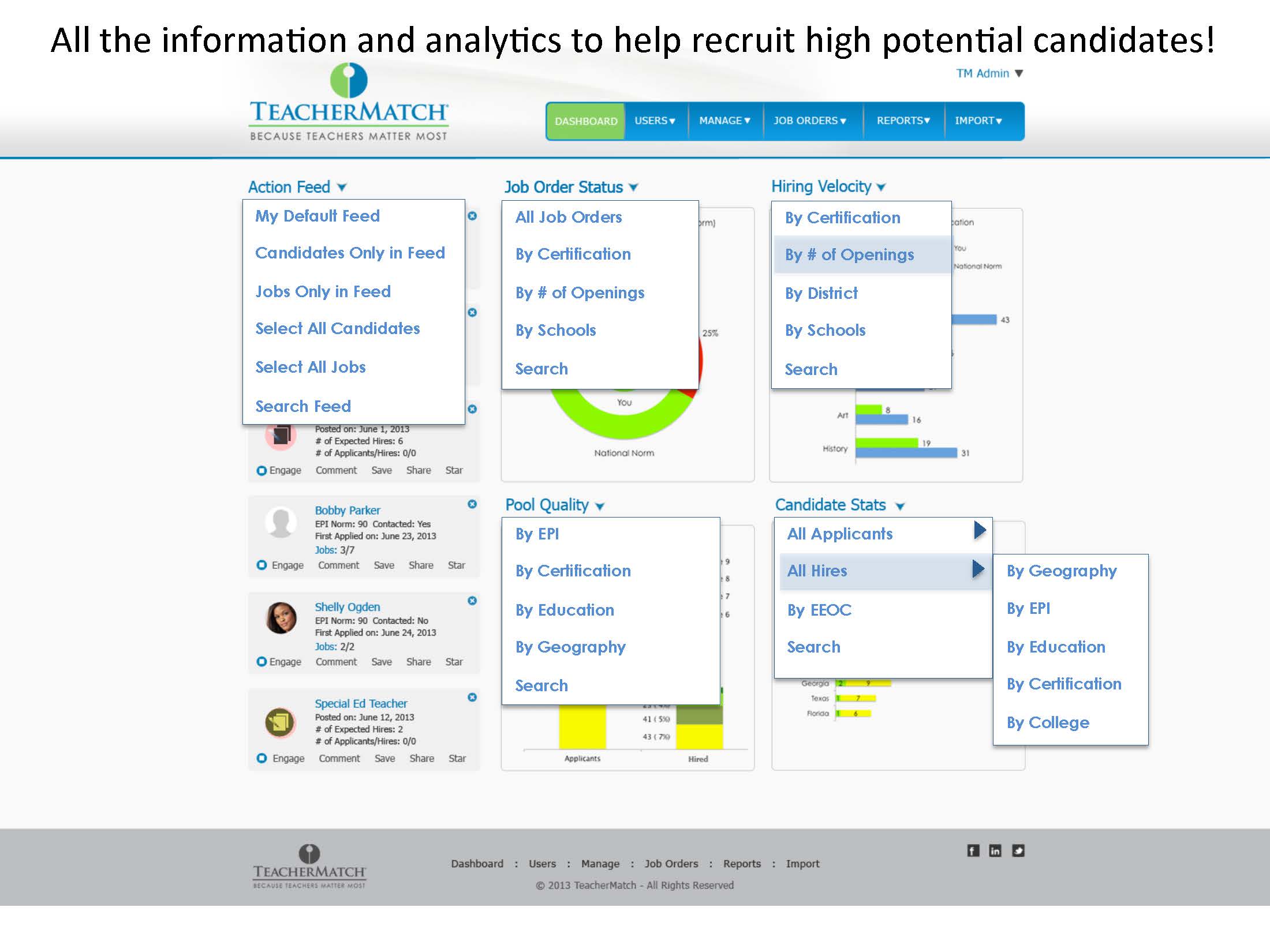
School Information System

Could Many Universities Follow Borders Bookstores Into Oblivion?

Marc Parry:

Higher education’s spin on the Silicon Valley garage. That was the vision laid out in September, when the Georgia Institute of Technology announced a new lab for disruptive ideas, the Center for 21st Century Universities. During a visit to Atlanta last week, I checked in to see how things were going, sitting down with Richard A. DeMillo, the center’s director and Georgia Tech’s former dean of computing, and Paul M.A. Baker, the center’s associate director. We talked about challenges and opportunities facing colleges at a time of economic pain and technological change–among them the chance that many universities might follow Borders Bookstores into oblivion.
Q. You recently wrote that universities are “bystanders” at the revolution happening around them, even as they think they’re at the center of it. How so?
Mr. DeMillo: It’s the same idea as the news industry. Local newspapers survived most of the last century on profits from classified ads. And what happened? Craigslist drove profits out of classified ads for local newspapers. If you think that it’s all revolving around you, and you’re going to be able to impose your value system on this train that’s leaving the station, that’s going to lead you to one set of decisions. Think of Carnegie Mellon, with its “Four Courses, Millions of Users” idea [which became the Open Learning Initiative], or Yale with the humanities courses, thinking that what the market really wants is universal access to these four courses at the highest quality. And really what the market is doing is something completely different. The higher-education market is reinventing what a university is, what a course is, what a student is, what the value is. I don’t know why anyone would think that the online revolution is about reproducing the classroom experience.

Share

More Election Tea Leaves: UW-Madison Ed School Dean on K-12 Tax & Spending: Defunding and privatization threaten public schools

UW-Madison Ed School Dean Julie Underwood:

Public education currently stands under twin towers of threat — de-funding and privatization. This is consistent with a conservative agenda to eliminate many public programs — including public education.
In Wisconsin, school districts have been under strict limits on their revenues and spending since 1993. These limits have not kept pace with the natural increases in the costs of everyday things like supplies, energy and fuel. So every year, local school board members and administrators have had to cut their budgets to comply with spending limits. Throughout these years, school boards and administrators have done an admirable job of managing these annual cuts, but taken together, reductions in programs and staff have had a significant and very negative impact on our schools and the education they can provide to children.
Unfortunately this year, these same districts have received the largest single budget cut in Wisconsin history. For example, high poverty aid was cut by 10 percent during a time when poverty in children has increased in Wisconsin. As a result, schools are cutting programs and staff. According to the Wisconsin Department of Public Instruction data, the cuts in 2012 are greater than the two previous years combined. These cuts will be compounded when next year’s cuts come due.

Related:

Share

Audio – Madison Achievement Gap Townhall Meeting: Last night at the Barrymore Theater

WIBA Outreach, via a kind Laura DeRoche-Perez email: Hour 1 [33mb mp3], Hour 2 [36mb mp3].
Notes & Links:
Madison Superintendent Dan Nerad’s $105,600,000 (over 5 years) plan to address the achievement gap.
Much more on the proposed Madison Preparatory IB charter school, here.

Share

Florida Education Reform

The Economist:

hese efforts thus represent an attempt to seize from Democrats one of their signature issues, public education. The states with the best schools, such as Massachusetts, still tend to be Democratic, with relatively high taxes and school spending. And some Democratic places, such as the District of Columbia and New York, have made aggressive attempts at reform. But voters increasingly see Democrats as beholden to teachers’ unions and the status quo, says Eric Hanushek, an education expert at Stanford University’s Hoover Institution. The Republican reformers, by contrast, promise reform without higher taxes, in part by confronting the unions.
This is why they look to Mr Bush. What he proved in Florida, claims Jaryn Emhof, his spokesman at the education foundation he now runs, is that “it’s not about how much you’re spending, but how you’re spending, how you’re teaching.” Although school spending did rise slightly under Mr Bush, Florida still spends very little per pupil compared with other states. With a Republican legislature, Mr Bush instead made Florida the only state to adopt an entire bundle of reforms simultaneously, in the teeth of the teachers’ unions.
First Florida started grading its schools from A to F, based on the proficiency and progress of pupils in annual reading, writing, maths and science tests. The state gives extra money to schools that get an A or improve their grade, and children at schools that get two F grades in four years are allowed to transfer to better schools. Second, Florida stopped letting third-grade pupils who could barely read go on to fourth grade (a practice, common all over America, called “social promotion”).

Excellence in Education explains Florida’s reading reforms and compares Florida’s NAEP progress with Wisconsin’s at the July 29th (2012) Read to Lead task force meeting.
Florida, along with Alabama, California, Colorado, Connecticut, Indiana, Massachusetts, Minnesota and North Carolina took the TIMSS global exam in 2011. Wisconsin, did not.

Share

AP college arms race: how to survive

Jay Matthews:

The number of high school students taking AP, IB, Advanced International Certificate of Education and local college courses has been rising. College admissions officers feel those courses prepare students better than regular high school courses for higher education. They tell applicants if their high school has such courses, they should take them. The admissions people add that if your school only offers five AP courses, they don’t expect you to have as many on your transcript as a student at a school that offers 25. But you weaken your case if your AP course taking is not in step with classmates applying to your favorite college.
Jodi Siegel, a College Bound educational consultant in Potomac, said if a student’s classmates “take an average of 6 or 7 APs and this student has taken 3 or 4, in all likelihood that student’s level or rigor will appear less impressive.” This is clear, she said, from admission decisions at schools like the University of Maryland.
The Washington area and other affluent regions have many public and private high schools with two dozen or more AP or IB courses. This is hard on students proficient in only a few of subjects available.

Share

When school fights land on YouTube

Donna St. George:

Two boys are fighting in a Calvert County middle school. A crowd of students laugh and jeer until a teacher arrives to break it up. Later discipline is meted out.
But the fight is not nearly over.
A video goes up on YouTube — 32 seconds of personal humiliation for the boy who is taking most of the punches. He has often been bullied in middle school, according to his family, and now is shown being hit in the head and side and placed in a headlock.
There is no apparent serious injury, and the clip is posted as “Weak People Fighting.”
It is uploaded onto Facebook, tweeted, shared and commented on.
“I showed my dad, he bust out laughin,” one girl writes on Facebook at 5:09 pm.

Share

Most public schools closed Monday due to teacher strike

Janet Steffenhagen:

Teachers were planning to distribute leaflets outside B.C. public schools Monday morning at the start of what is likely to be a three-day strike.
Because picketing is not legally permitted in this job action, schools were expected to remain open, with principals, vice-principals and support staff on the job. But almost all districts have cancelled bus services and are urging parents to make other arrangements for their children rather than sending them to school.
“It is not possible for school administrators … to provide appropriate supervision for more than 70,000 students,” Surrey, the province’s largest school district, says in a statement on its website. “Even if just a fraction of the total number of students were to attend, their safety and well-being may be seriously compromised.”
StrongStart Centres and child care programs on school property around the province are not expected to be affected.

Share

What Does it Mean to Be Literate

Daniel Russell:

I don’t mean to be presumptuous, but maybe the question is better framed like this: “How illiterate are you?”
Technically, to be literate means you can simply read and write (that is, code and decode) in the representation system of your social group. But even that simple definition assumes that there is a shared coding scheme. If you’re a kid in the US in the early 21st century, that’s probably English; but it could also just as well be Spanish or Chinese.
But it also has the sense of having knowledge or being competent in a specific area. You can say, “he’s literate about wine,” “literate about netsuke,” or “literate about the Old Testament.” A quick search reveals a whole host of literacies that are common these days: media literacy, information literacy, financial, bible, multicultural, interactive, news, environmental… on and on.

Share

Parent Tossed From High School Hockey Game For Aiming Laser Pointer At Goalie

CBS Boston:

Medway-Ashland’s girls high school hockey team lost their appeal of their playoff loss Friday, after a parent was tossed from the game for aiming a laser pointer into the eyes of their goalie.
The score was tied 1-1 in the third period when the father of a Winthrop player was caught pointing the laser at the Medway-Ashland goalie.

Share

Public response to Iowa education reform a ‘mixed bag’

Mike Wiser:

Charter schools, online learning, third-grade retention, teacher seniority and a dozen more topics were part of a two-hour public forum Monday night at the Iowa House.
About 40 of the 70 who signed up to give their views on Iowa education were able to in the two-hour time limit imposed by the House. Speakers included teachers, school administrators, parents, lobbyists, students and even the state’s chief executive
Gov. Terry Branstad was first to take the microphone. Right off the bat, he took on critics of three of the most controversial parts of his education reform package.
He told lawmakers that third-grade retention for poor readers, end-of-course exams for high school seniors, and more frequent and rigorous evaluations for teachers and principals are all needed to put Iowa back on top of school rankings.

Share

Create schools where kids don’t have to fight for honor

Angela Dye:

The issue of violence in our schools is a gateway to explore other problems in society. For individuals who are willing to move beyond the micro discussion of blaming students and think critically about the macro phenomenon of systemic oppression, school violence provides insight into the community hopelessness with which children are left to contend.
Before delving into the social context of violence that is occurring in Milwaukee, let’s first examine the socioeconomic and instructional conditions of student learning at the local and state level:
88% of students enrolled in Milwaukee Public Schools are of color, while only 26% of students enrolled at the state level are of color.
19% of MPS students have a special education classification, while only 14% of students at the state level are classified as special education.

Share

Partnerships with schools can help reduce violence

The Milwaukee Journal-Sentinel:

Public schools have a problem with youth violence because the city has a problem with youth violence. There is no magical solution that will fix this multilayered problem, but one thing is certain: Milwaukee Public Schools cannot fix the problem alone.
While the district can put scanners at the doors of every high school to make sure weapons do not enter the building, it will take a communitywide approach that includes parents, social service agencies, community groups, businesses and mentors to help kids deal with the many problems they face, problems that increase the risk of violence.
Matthew Boswell, principal at Vincent High School, said a collaborative approach will help students succeed and make schools safer. In fact, schools and school districts with the strongest community support are safer and have the best student achievement, he said.

Share

Did Obama Really Say He Wants Everyone to Go to College?

James Altucher:

There’s a weird debate happening out there. Apparently Rick Santorum “accused” Obama of insisting that every child go to college. Other websites have said that Obama has never said this but instead has encouraged every kid to seek a higher education. I don’t care about Obama or Santorum. I don’t care about politics at all. But it’s interesting to me how this issue has again sparked a debate.
Expect lots of lies and cutting and stabbing for the next few months until the election. Santorum clearly lied. Obama lies. Everyone will lie about everyone else. Which is why I hate politics, why I think Congress should be abolished, and why I think Nobody should be voted in as President. (Quick: name the last President that actually improved your life as a direct result of their policies.)
And now suddenly, and sadly, “to go or not to go” to college has become a political issue. Yet another pressure trying to ruin the lives of our children.

Share

Achievement Gap Plan Front And Center At Madison School Board Candidate Forum

Amelia Wedemeyer:

About 20 people attended a 2012 School Board candidate forum, co-sponsored by the Northside Planning Council (NPC) and the East Attendance Area PTO Coalition (EAAPTOC), held at Warner Park Community Recreation Center on March 1.
Community members were introduced to the four candidates running for two available seats on the School Board.
The candidates, who include incumbent, Arlene Silveira, vice president of education and learning at Urban League of Greater Madison, Nichelle Nichols, former Commerce Secretary, Mary Burke, and firefighter, Michael Flores, gave brief introductory statements and then answered questions posed by the NPC and the EAAPTOC.
Nichols will take on Silveira, and Burke and Flores will face each other at the polls on April 3.
One of the first questions of the night referred to the recent achievement gap plan proposed by the Madison Metropolitan School District (MMSD). Each candidate was asked what they thought the single most important part of the plan was.
Burke mentioned the significance of the broad array of programs designed to affect students of all ages, while her opponent, Flores, likened the plan to his job as a firefighter.

2012 Madison School Board Candidates
Seat 1:

Nichele Nichols
www.nichols4schoolboard.org
email: nnichols4mmsd@gmail.com

Arlene Silveira (incumbent)
www.arleneforschoolboard.com
email: arlene_Silveira@yahoo.com

Seat 2 Candidates:

Mary Burke
www.maryburkeforschoolboard.net
email: maryburkewi@gmail.com

Michael Flores
www.floresforschoolboard.org
email: floresm1977@gmail.com

Arlene Silveira & Michael Flores Madison Teachers, Inc. Candidate Q & A

Share

Tea Leaves in the Madison School Board Election: Arlene Silveira: “After budget cuts, school board needs priorities”

Madison School Board Member Arlene Silveira

Let me tell you a bit about why I’m running and what issues the Board faces.
Public schools face unprecedented challenges. Republican presidential candidate Rick Santorum recently called public school systems “anachronistic.” Walker’s budget contains the biggest cut to education in Wisconsin history.
Here in Madison, the Board of Education faces many significant issues: an upcoming budget with a multi-million dollar deficit; children of color, often living in poverty, who do less well in school and graduate at lower rates and a difficult transition from collective bargaining agreements, which Walker eliminated, to a personnel “handbook” that will define our relationships with teachers and staff.
When our schools face multiple challenges, board members must have the backbone to focus on what is most effective in helping all children learn and achieve. We must prioritize initiatives that provide the biggest bang for our buck. When there are hard choices to be made, we owe it to the children we serve to engage in respectful debate in order to find solutions.
I approach my work on the board from many perspectives: as a parent, businessperson, taxpayer and advocate for public education. I will continue to fight against assaults on public education, whether they are attempts to privatize public education or ones that demonize teachers.

Seat 1 Candidates:
Nichele Nichols
www.nichols4schoolboard.org
email: nnichols4mmsd@gmail.com
Arlene Silveira (incumbent)
www.arleneforschoolboard.com
email: arlene_Silveira@yahoo.com
Seat 2 Candidates:
Mary Burke
www.maryburkeforschoolboard.net
email: maryburkewi@gmail.com
Michael Flores
www.floresforschoolboard.org
email: floresm1977@gmail.com
Arlene Silveira & Michael Flores Madison Teachers, Inc. Candidate Q & A
Several related notes & links:

Share

Bernanke Gets Back to His Academic Roots

Kristina Peterson:

When George Washington University adjourns next week, 30 students will be doing 50 pages of assigned monetary policy reading while on their spring break.
The homework wasn’t a deterrent to the students who applied to take BADM 4900, a business course that started Tuesday. Boosting the popularity of the half-semester, 1.5-credit course, “Reflections on the Federal Reserve,” is its headlining guest lecturer: the central bank’s chairman, Ben Bernanke.
Later this month, Mr. Bernanke will become the first sitting Fed chairman to deliver a college lecture series. The move highlights the former professor’s push to make the central bank more transparent and accessible by using his academic bona fides to explain the Fed’s many unconventional actions since the financial crisis.

Share

Mental Math with Tricks & Shortcuts

Mathema Tricks:

These days we have become so much dependent on the mechanical devices that we have almost forgotten how to use our mind. We need calculators (if not computers) to add our shopping bills. Daily life tosses plenty of math problems our way. Of course, normal calculation can get boring. Here’s the secret: Tricks & Shortcuts. Mental calculation comprises arithmetical calculations using only the human brain, with no help from calculators, computers or even pen and paper but easily and quickly.

Share

In a Flood Tide of Digital Data, an Ark Full of Books

David Streitfeld:

RICHMOND, Calif. — In a wooden warehouse in this industrial suburb, the 20th century is being stored in case of digital disaster.
Forty-foot shipping containers stacked two by two are stuffed with the most enduring, as well as some of the most forgettable, books of the era. Every week, 20,000 new volumes arrive, many of them donations from libraries and universities thrilled to unload material that has no place in the Internet Age.
Destined for immortality one day last week were “American Indian Policy in the 20th Century,” “All New Crafts for Halloween,” “The Portable Faulkner,” “What to Do When Your Son or Daughter Divorces” and “Temptation’s Kiss,” a romance.

Share

K-12 Tax & Spending Climate: As Stockton struggles, so does California

Dan Walters:

So Stockton has suspended payments to its bondholders and is seeking to renegotiate its debts in hopes of averting a formal bankruptcy.
Sound familiar? It’s what Greece, which also is head-over-heels in debt, is doing.
The parallels are uncanny. Stockton and Greece spent heavily to keep money flowing to those with political pull, and borrowed heavily, all in the name of societal improvement.
Stockton wanted to improve its poor municipal image – crime-ridden and corrupt. So it borrowed to build a new sports arena, a baseball park, a hotel and a marina – the latter so over the top that boaters visit just to gawk at its grandiosity – while giving extravagant benefits to its employees.

Share

Arrested dad wants answers after daughter draws gun pic

Kris Sims:

Jessie Sansone and his family are reeling after he was arrested and strip searched by police after his four-year-old daughter drew a picture of a man with a gun in her Kitchener, Ont., kindergarten class.
The 26-year-old father of four said Saturday the sketch was supposed to be him, getting the bad guys and monsters.
The school must have thought differently, as after Nevaeh drew it Wednesday, the school contacted Family and Children’s Services and they called police.

Share

A “Startup for Managing Roommates”

goodmate.co.
A sign of the times, I suppose. Automation in the absence of working processes never works…

Share

Madison School District “Handbook” must make students top priority

Chris Rickert:

Assuming Democrats aren’t able to take over state government early next year and reinstate full-fledged public sector collective bargaining, we’re talking about the replacement of some 400 pages of detailed contract language for five district bargaining units.
Madison teachers union-backed board candidates Arlene Silveira, an incumbent, and Michael Flores have indicated to the union that they would essentially be OK with the handbook becoming the collective bargaining agreements by another name.
Mary Burke, who is running against Flores, and Nichelle Nichols, who is challenging Silveira, have not.
“One of the most important needed changes is the use of student learning as a component of a teacher’s evaluation,” Burke told me, while Nichols predicted that employee evaluations, compensation practices and a longer school day or year are likely to be contentious handbook topics.
Silveira told me she’d like the handbook to allow for more flexible scheduling, possibly including more classroom time.
Whatever the specifics of the final product, though, it’s unlikely to be anything but a fair — if not a better-than-fair — deal for employees. Madison, with its public worker union sympathies, won’t stand for anything less.

Share

Madison school board candidates Nichelle Nichols and Arlene Silveira discuss why they are running, poverty in the schools

Isthmus Take Home Test (Nichelle Nichols & Arlene Silveira):

WHAT QUALIFIES YOU TO BE ON THE MADISON SCHOOL BOARD ? WHAT IS YOUR PERSONAL STAKE IN THE MADISON SCHOOLS?
Nichelle Nichols
Our school board must be a governing body that is effective in setting the direction and priorities of our district. We need to elect board members who are honest about our current realities and who share a fundamental belief that we must make bold changes in order to better educate all students. Our students, families and taxpayers deserve it.
I bring a future-oriented mindset to the table and a commitment to solutions. Our heart-breaking graduation rate for Black and Latino students eloquently testifies that we do not fully understand the dynamics of poor student performance or the educational changes required to remedy it. I am personally and professionally committed to making systemic changes to close the racial achievement gap. It is time for defenders of the status quo to step aside.
I am qualified as a parent, as an engaged community member, and as a professional who has worked the last 15 years in community-based organizations throughout Madison. I bring a critical perspective from the service delivery level focused on equity for those who are most disadvantaged. As a woman of color, a parent of African American sons, and through my work at the Urban League, I am immersed in the realities of our minority students, yet in touch with the experiences of all students and parents. I am informed beyond the constraints of the boardroom.
I have a personal stake in the Madison schools that spans two generations. I am a Madison native who attended Longfellow Elementary, Cherokee Middle, and graduated from West High. I have a B.S. from UW-Madison and a master’s degree in Business Management from Cardinal Stritch University. I am the mother of four African American sons. My eldest graduated from West High School in 2011, which leaves me with three yet to graduate. Based on the 48% graduation rate, the odds are that two of my sons won’t graduate. This is unacceptable.
My experience transcends the experience gained from currently sitting on the board, because where we must go will not rely strictly on what we’ve always known. I welcome the challenge.
Arlene Silveira
Our schools face multiple challenges, and board members must have the backbone to focus on what is most effective in helping all children learn and achieve. We must prioritize initiatives that provide the biggest bang for our buck. When there are hard choices to be made, we owe it to the children we serve to engage in respectful debate in order to find solutions.
That is my record on the school board. My commitment to public education, to Madison’s 27,000 students, to our outstanding teachers and staff, and to staying in the fight for good public schools are the reasons I am running for re-election.
My belief in public education has roots in my personal story. I am the grandchild of immigrants, the daughter of two working class parents, and the mother of a child of color who graduated from the Madison schools. I have a degree in secondary education, biology and chemistry from Springfield College (Massachusetts), and a masters in molecular biology from the University of Connecticut.
I have seen first-hand the advantages public education brings and the equalizing effect public schools have in our society. I have seen first-hand the struggles a child can face in the schools. I am a businesswoman who works at a global scientific company. I know the need for an educated workforce, and I know that good schools strengthen a city because they attract businesses and families.
I am also a taxpayer. The state funding system for public education is not sustainable. We must find a way to better fund our schools, not on the backs of taxpayers. I will continue to advocate for fair funding.
The skills I use on a daily basis as Director of Global Custom Sales at Promega Corporation are also skills I use as a board member — budgeting, communication, evaluation, facilitation, negotiation and project management.
In short, I approach the board’s complex work from many perspectives: parent, businessperson, taxpayer, and advocate for public education. I will continue to fight against assaults on public education and advocate for what is most effective for all the students we serve.

Isthmus Take Home Test (Mary Burke & Michael Flores):

WHAT QUALIFIES YOU TO BE ON THE MADISON SCHOOL BOARD? WHAT IS YOUR PERSONAL STAKE IN THE MADISON SCHOOLS?
Mary Burke
When I began tutoring two brothers on Madison’s south side, I saw how tough it is for children with serious challenges at home to learn and thrive in school. School was a refuge for these boys, and education was the best way for them to build a better future. I have worked with teachers striving every day to meet the needs of each student, to challenge the gifted child and the one just learning English. In the past 13 years, I have mentored five youth, have seen great things in our schools, and opportunities to do better.
I care about our children. My broad experience in education, non-profits, government, finance, and business will make me an effective school board member. After receiving an MBA from Harvard, I was an executive at Trek Bicycle, Secretary of the Wisconsin Department of Commerce under Governor Doyle, board president of the Boys & Girls Club, and co-founder of the AVID/TOPS program. AVID/TOPS is the district’s premier program to address the achievement gap, and has 450 students across all four Madison high schools. For those in the program, grade point averages are 30% higher, school attendance higher, discipline issues down, and 100% of seniors have gone onto college. I’ve served on the boards of United Way, Madison Community Foundation, Evjue Foundation, and Foundation for Madison Public Schools. One current school board member said, “Mary Burke stands out. Mary may be the best-qualified candidate to run for Madison School Board in quite a while.”
Success in school for our children is important to me and to our entire community. Our public schools shape our future neighbors and workforce. Success in school is a leading factor in whether a student is on the path to UW-Madison, Madison College, or the county jail. Nothing is more important and critical to our city’s future than our public schools.
I have been a catalyst for positive change in Madison. On the school board, my focus will be bringing our community together to ensure students learn and thrive — taking smart action for them, for our neighborhoods, for all of Madison.
Michael Flores
I have real world experience. I am part of a minority group and have walked the path that a number of our students are encountering. I have worked since I was 14, and supported myself from the age of 17 on. I have worked as a bank loan officer and small businessman, and know what it means to face budget constraints. My training as a paramedic has made me skilled in high emergency prioritizing and urgency in decision-making — skills that will translate to the work on the school board. As a parent and member of this community, I have a vested interest in education.

Seat 1 Candidates:
Nichele Nichols
www.nichols4schoolboard.org
email: nnichols4mmsd@gmail.com
Arlene Silveira (incumbent)
www.arleneforschoolboard.com
email: arlene_Silveira@yahoo.com
Seat 2 Candidates:
Mary Burke
www.maryburkeforschoolboard.net
email: maryburkewi@gmail.com
Michael Flores
www.floresforschoolboard.org
email: floresm1977@gmail.com
1.25.2012 Madison School Board Candidate DCCPA Event Photos & Audio
Listen to the event via this 77MB mp3 audio file.

Share

HOW MAPS CHANGE THINGS: A Conversation About the Maps We Choose, and the World We Want

Free through 3.31.2012 in epub, pdf and mobi format:

This is a book of passion, media literacy and social justice. Grounded in real-life examples, it points the way for all of us by raising important questions of how we can live on this planet as one human family.

Share

Mary Burke for Madison School Board

Madison School Board Member Ed Hughes:

Mary Burke and Michael Flores are vying to replace Lucy Mathiak on the Madison School Board. Judged by their background, experience and skills and by the extent to which they’re prepared to grapple with the tough issues the Board faces, there is simply no comparison between the two. Mary Burke stands out. Mary may be the best-qualified candidate to run for Madison School Board in quite a while. (She’s far better qualified than I was when I first ran, for whatever that’s worth).
Let’s run through some of the dimensions of experience that can be helpful for School Board service. Involvement with our schools? Check. Mary is the co-founder and co-chair of the AVID/TOPS program, a widely-praised partnership between the school district and Boys and Girls Club that started at East High and is now in all our high schools and spreading to our middle schools. She is a mentor to a sophomore at East and to a foster teen in the district’s program for school-aged parents and she tutors first graders as a Schools of Hope volunteer at Frank Allis School.
Business experience? Check. Mary has started a business, worked for Trek Bicyle, worked as a business consultant and served as Secretary of the Wisconsin Department of Commerce. Board experience? Check. Mary has served on the Boards of the Foundation for Madison Public Schools, the Madison Community Foundation, the United Way, and the Evjue Foundation, and was a long-time president of the Board of the Boys and Girls Club.

Much more on Ed Hughes, here.
Madison School Board Election Notes and Links:
Nichele Nichols
www.nichols4schoolboard.org
email: nnichols4mmsd@gmail.com
Arlene Silveira (incumbent)
www.arleneforschoolboard.com
email: arlene_Silveira@yahoo.com
Seat 2 Candidates:
Mary Burke
www.maryburkeforschoolboard.net
email: maryburkewi@gmail.com
Michael Flores
www.floresforschoolboard.org
email: floresm1977@gmail.com
1.25.2012 Madison School Board Candidate DCCPA Event Photos & Audio
Listen to the event via this 77MB mp3 audio file.
Arlene Silveira & Michael Flores Madison Teachers, Inc. Candidate Q & A
The “status quo” vs. reform battle appears to be underway. Change is very, very hard at the local, state and federal levels. Progress is further subject to lobbying….

Share

Alice Waters in Houston: ‘Shelling Peas’ for the Greater Good

Emily Deprang:

Alice Waters, the famed chef, author, and activist, addressed a packed house at the Wortham Center’s Cullen Theater in Houston on Monday night, sharing her values and advocating for an “edible education” in public schools.
Waters is widely credited with revolutionizing New American cuisine through her Berkeley, Calif., restaurant, Chez Panisse, which has focused on organic, local, seasonal foods prepared simply ever since its inception in 1971. Her influence as an early champion of farmers markets and school lunch reform can hardly be overstated, though she’s been well recognized along the way. Chez Panisse was named Best Restaurant in America by Gourmet magazine, Waters was named Best Chef in America by the James Beard Foundation, and in 2009, Waters became the only American chef to receive the French Legion of Honor.

Share

A geek’s guide to writing

Ben Werdmuller:

I’ve had this idea for a story for years. We live in a world where truth is curated for us, everything we do can be tracked and used to infer things about what we’re going to do next, and identity is defined by what we broadcast. What happens when we no longer fit into the narrative?
This year, I’m writing it. It’s called Profiled, and I’ll be releasing it in installments later this year, alongside a blog about taking a lean startup approach to writing a novel. You can sign up for free here. (And yes, these posts and the signup form are my minimum viable product.)
I can’t tell you too much about my actual writing thought process, because I don’t know what to say. I’m getting into the story, which is probably a good sign, but there’s no getting away from the fact that I’ve never done this before. I need professional advice and editing. More on that another time.

Share

Fixing schools with brawn and brains

Matthew Tully:

I receive the same two questions every time I stand before an audience to talk about the year I spent chronicling one of the worst-performing schools in the state of Indiana.
“What’s the solution?” and “What did you learn?”
The solution, I argue, can be found in the failing schools themselves. Despite all of the problems I found during my year at Manual High, there were pockets of excellence that can serve as a guide. Such as:

  • The 25-year-old choir teacher who worked so hard to engage his students that he was often sweating at the end of his classes. By his second year at the school, the choir program had more than tripled in size and previously at-risk students were working harder than ever.
  • The Army veteran turned school police officer who spent every day trying to build relationships with students, aware that many needed a mentor and that the relationships he forged today would pay off in times of crisis later.
  • The special-needs teacher who was nearing retirement age but just couldn’t imagine walking away from a group of students who suffered from the most profound learning disabilities. Her students wouldn’t go to college, but she knew that if she worked hard enough some would ultimately be able to live semi-independently.

When people ask me for a quick-hit solution to America’s education problems, I instead share the words of Earl Martin Phalen, who runs a program in Indiana that seeks to prevent low-income students from suffering a summer learning loss. Two years ago, a schools superintendent introduced Phalen at a news conference as: “The brains behind the operation.”

Searching for Hope, Life at a Failing School in the Heart of America by Matthew Tully

Share

What’s so bad about American parents, anyway?

Brigid Schulte:

It wasn’t that long ago that American parents were gripped with Tiger Mother anxiety. Did we overpraise our kids in the name of promoting self-esteem? Were we forfeiting an Ivy League future for them if we didn’t force them to practice endless hours of violin or rip up birthday cards that weren’t perfect? Were we, as Amy Chua said in her best-selling memoir, “Battle Hymn of the Tiger Mother,” raising children who were “soft” and “entitled?” ¶ Now, though, it’s the French who have it figured out. Just like Chua’s book, journalist Pamela Druckerman’s recently released “Bringing Up Bebe” — which lauds the “wisdom” of French parents, who love their children but don’t live for them the way American parents do — has hit the bestseller lists. Another new parenting-by-comparison book, “How Eskimos Keep Their Babies Warm,” extols the virtues of the Argentines, who keep Baby up late for special occasions, and the Japanese, who let their kids fight it out. ¶ Such frenzied fascination with foreign parenting raises a question: Are American parents really that bad?
The simple answer is no. Of course we love our children and want what’s best for them. Our problem is that we’re not sure what, exactly — in our driven, achievement-oriented country — is best. Perhaps instead of snapping up the latest foreign fad or obsessing over every international test score ranking, American parents would do well to look no further than a very American ideal: the pursuit of happiness.

Share

Editor of Dictionary of American Regional English finally reaches Z

Todd Finkelmeyer:

It took nearly five decades, but those producing the Dictionary of American Regional English finally reached Z.
The dictionary, known as DARE, is produced on the UW-Madison campus and includes a range of words, phrases, pronunciations and pieces of grammar that vary from one part of the United States to another.
Like a conventional dictionary, DARE is arranged alphabetically. But the multi-volume DARE goes on to not only give information about a word’s meaning but to indicate where people use it.
Americans, for example, have a collection of words for sandwiches served on a long bun that include meat, cheese, lettuce and tomato. The Dictionary of American Regional English can tell you — and often show you via maps based on fieldwork — where words such as hero, hoagie, grinder, sub, Cuban and the like are the local terms for this kind of sandwich.
The fifth volume of the dictionary, covering Sl through Z, now is available from Harvard University Press.

Share

Sleepless in the South: Penn Medicine Study Discovers State and Regional Prevalence of Sleep Issues in the United States

Penn Medicine:

Researchers at the Perelman School of Medicine at the University of Pennsylvania have put sleeplessness on the map — literally. The research team, analyzing nationwide data collected by the Centers for Disease Control and Prevention (CDC), has produced the first state-by-state sleep maps for the United States, revealing that residents of Southern states suffer from the most sleep disturbances and daytime fatigue, while residents on the West Coast report the least amount of problems. The results are published online in the Journal of Clinical Sleep Medicine.

Share

Well-funded schools good for all, kids or no kids

Neil Steinberg:

When my family moved out of Chicago, we left for only one reason: the schools. Our neighborhood school was substandard, we couldn’t afford to send the boys to private school and weren’t willing to take our chances with the musical chairs game of getting into a magnet school.
So off to Northbrook we fled. And nothing in nearly a dozen years of closely observing two students move through the school system, day by day, from crayoning smiley yellow suns to studying calculus, has made me question the wisdom of that decision. Now we’re seeing the next school generation — families with toddlers moving to our block, following the same path we did. To us, school trumps almost everything.
Not everyone believes that, of course. Most Chicago suburban tax referendums failed last year. From Prospect Heights to Mokena, residents heard the words “tax increase” and said forget it. Times are tight. Who needs good schools?
But look at the result. One of those districts rejecting a referendum last year was West Northfield School District 31. One subdivision — the district covers parts of Northbrook and Glenview — voted 12-to-1 against it. Still the district is trying again this year, but if the referendum doesn’t pass this time, the results will be dire.

Share

Archbishop Mitty High School embraces iPad as learning tool

Patrick May:

It’s midmorning and the faces of the students in Tim Wesmiller’s religious studies class are bathed in the baby-blue glow of their iPad screens.
Instead of sitting in rigid rows of desks staring at a blackboard, as they would in a typical classroom, kids huddle in groups to brainstorm and blog about Indian culture. Lessons flash from tablets to digitalized white board and back. The “lecture” is a blend of YouTube videos and interactive maps. There’s very little paper and no sign of chalk.
Faculty and students in this two-year iPad pilot project at Archbishop Mitty High School say this is the future of education.
“We still use paper and pencils sometimes,” says Jeremy Pedro, a soft-spoken junior. “But our homework is mostly digital. Paper homework is a thing of the past.”

Share

Latest Madison Teachers’ Solidarity Newsletter

Madison Teachers’, Inc. Solidarity via a kind Jeanne Bettner email:

MTI and the District have been in dispute regarding the interpretation of Section III-R of the Collective Bargaining Agreement regarding Class Covering Pay since 2007 when MTI filed a grievance on behalf of the staff at Sennett Middle School. The grievance was over class covering pay when a substitute teacher is unavailable and students were assigned to other staff.
Resolution was achieved through a grievance mediation process which MTI and the District entered into last school year in an attempt to deal with a backlog of grievances. The process, which was recommended by Mediator/Arbitrator Howard Bellman during negotiations three years ago, is part of a project begun by Northwestern University Law School.
The mediated agreement resulted in clarity to the language that ensures teachers and other teacher bargaining unit members are compensated for covering another teacher’s class while leaving some flexibility for unforeseen emergencies and rare occurrences.
Section III-R states that when the District is unable to assign a substitute teacher to cover for an absent teacher, the building principal must first solicit volunteers from those teachers available to cover the class in question. If no teacher volunteers, the principal may assign a teacher to cover another teacher’s class.
The District had maintained that to be compensated for this work the covering teacher had to lose prep or planning time. MTI disputed that interpretation. In addition, the District contended that classes could be split up and assigned to multiple classrooms without receiving class covering pay.
The following constitutes the resolution of this matter as to when class covering pay is owed to teachers:

Share

‘Tis a Shame, the Mastication of Education

Steve Strieker:

In his 2006 memoir Teacher Man, the late, great Frank McCourt tersely wrote, “Teaching is the downstairs maid of professions.”
Just six years later, McCourt’s proposition is already in need of a rewrite. In Walker’s Wisconsin, teaching has been relegated from professional status to political fodder. I fear what will be excreted when the free-market reformers are done masticating education.
Professional distrust reigns in the wake of Gov. Walker’s union-busting legislation created without consideration of professional educators’ input. Too many state and local business-focused politicians and their supporters have promoted unjust resentment for teachers, their unions, their compensation packages, their work conditions, and their professional standing.

Share

Survey: Wisconsin Residents Believe K-12 Per Student Spending is $6,000, less than half of Reality

George Lightbourn:

And they were right; the public really did not understand the state budget. When our pollster asked what was the largest expenditure in the state budget (school aids at 40% dwarfs everything else), 70% of the people guessed wrong.
And when we asked them how much was spent in Wisconsin’s K-12 schools, the average guess – $6,000 per student – was less than half of what it actually was.
However, while the public might not understand the specifics of the budget, they seem to get the big picture.
Looking at that big picture, we see that Wisconsin is feeling considerably better about the management of state finance today than a couple of years ago. Let’s look at what the polls said.
Leading up to the last election for governor, our pollster asked if the public thought the elected leaders in Madison were, “capable of solving the state budget deficit.” Only 23% said they did. 59% of those same citizens told our pollster that they saw the state budget as a big problem.
What a disconnect. It’s not often that you can actually measure public cynicism, but that is exactly what that poll did. It is ironic that he cause for the cynicism was the very political leaders who were counting on the public on being too dim to understand what was really going on in the budget?
Now, after Governor Walker and the Legislature have rather famously – some would say infamously – balanced the state budget, how is the public feeling? We asked about that last October when 41% of the public said that they actually thought the budget – a budget that included numerous cuts – would actually improve the future quality of life in Wisconsin. This level of approval is surprising given that most people – even Republicans – tend to get weak in the knees when it comes to spending cuts.

Locally, Madison will spend $14,858.40 / student during the 2011-2012 school year. The 2011-2012 budget is roughly $369,394,753 for 24,861 students.

Share

On Madeline Island, a Tiny School Stands Worlds Apart

Mike Nichols:

But for the often tumultuous waters of Chequamegon Bay, LaPointe Elementary would have long ago been shuttered and forgotten, its students shuttled off to other schools in other places.
LaPointe is one of the tiniest little grade schools in Wisconsin, perhaps because it is barely even in Wisconsin. It sits on Madeline Island, 2.5 miles by ferry – or even wind sled in years colder than this one – across Superior from Bayfield.
“For safety reasons, the school stays open,” said Carol Sowl, who describes herself as the K-5 school’s sole teacher, janitor and nurse. Crossing the bay can be a treacherous business in some of the colder months when the waters heave and the ice shifts, and makes for too risky a ride for six- and seven-year-olds. In addition, the Bayfield School District that LaPointe is part of receives a lot of tax revenue from the island residents and summer-home owners, many of whom want the school to remain open.

Share

Conservative MLA’s letter to school board was blatant intimidation, opposition critics say

Keith Gerein:

A culture of “political extortion” practised by the Alberta government has been laid bare in a recent letter from northern Conservative MLA Hector Goudreau to a school board, opposition parties allege.
In the Feb. 9 letter obtained by The Journal, Goudreau warned the Holy Family Catholic School Division that criticism of the government could imperil the district’s chances of funding for a new school.
“In order for your community to have the opportunity to receive a new school, you and your school board will have to be very diplomatic from here on out,” the Dunvegan-Central Peace MLA tells district superintendent Betty Turpin.
“I advise you to be cautious as to how you approach future communications as your comments could be upsetting to some individuals. This could delay the decision on a new school.”

Share

Bilingual schools offer new educational wrinkle

Diane Solis:

Inside the small classrooms of Lorenzo de Zavala Elementary School, first-grade students detail recipes, in Spanish, for “limonada,” lemonade. “Agua, hielo, limon.”
In another room, older students construct sentences, in English, with the word “malfunction” as they work through a Star Wars-inspired game. “My brain wasn’t working,” says one boy mischievously. “It had a malfunction.”
Not missing a beat, teacher Charles Stewart tells a Star Wars comrade, “Cesar, turn his brain back on.”
The giggles tumble out. But this is serious teaching and turning brains on is exactly the point. Teaching at this humble elementary school, just west of the Trinity River and a giant new bridge, is part of the most serious restructuring of bilingual education in decades.

Share

MMSD’s Plan to Close the Achievement Gap: All Students Welcome

Karen Veith:

When I attended the Board of Education meeting back in October 2011, I walked in without expectations. I was there to hear the public testimony on Madison Preparatory Academy and to figure out my own position in this controversy. I listened to everyone speak, but I came away from the meeting conflicted. I realized that my desire to do something to eliminate the achievement gap was as strong as ever, but that something seemed amiss. Rather than rely on what I had read in the media or heard at the podium, I decided to do my homework and read the Urban League’s proposal for this charter school. What I found in its pages confirmed my fears that this was not a solution for the students I serve.
My Thoughts on Madison Preparatory Academy 10/22/2011
Madison Preparatory Academy Still Waiting for Answers 11/07/2011
So, it was with hesitance that I received Superintendent Nerad’s words earlier this month. His summary was well received by those in attendance, but it was just that, a summary. A coworker handed me the 97 page plan and I’m fairly certain a sigh escaped with my “Thank you.” Once again, I was sent home with studying to do.

Share

L.A. Unified bans blindfolding during lessons

Howard Blume:

A new fourth-grade reading program recommends using blindfolds to help students learn about sensory details. But in light of the Miramonte Elementary case, district officials consider it prudent to eliminate the eye coverings.
Who knew that blindfolding students was part of the curriculum in the Los Angeles Unified School District?
It was, until last week, when a senior district official nixed a lesson in a new fourth-grade reading program.
The blindfolding of students attracted notice after the January arrest of Miramonte Elementary teacher Mark Berndt, who has pleaded not guilty to 23 counts of lewd conduct for allegedly photographing students blindfolded and being spoon-fed his semen.
In light of that case, blindfolding “may be perceived negatively,” wrote Deputy Supt. of Instruction Jaime Aquino, in a Feb. 23 memo to principals.

Share

Obesity map of the world

OECD:

Obesity rates are still high worldwide, according to a new report from the Organisation for Economic Co-operation and Development (OECD). Australia ranks as the fifth worst country in the world for adult obesity, with a rate of 24.6 percent.
The OECD report says obesity is related to inequality, with higher rates among poorer people.
Compare adult obesity rates in OECD countries with this interactive map:

Share

In public vs. voucher debate, focus on individual schools

Alan Borsuk:

Five years and three dozen reports later, here’s the biggest thing I have learned when it comes to comparing how kids are doing in Milwaukee Public Schools and in the publicly funded voucher program for private schools:
We’ve got some schools that are getting very good results. But we’ve got a lot of problems, and that’s true across the board. You’ll find schools where weak outcomes are the dominant reality in MPS, in the voucher program and among the independent charter schools. Three major streams of schools in Milwaukee and not much reason to cheer for any of them, in and of themselves.
What’s there to cheer for? Specific high performing schools – voucher, charter and MPS. Specific school leaders, teachers, supporters and kids. Specific people who are pushing to improve the status quo. Specific people who are willing to work together, including across ideological lines, to build up what works and tear down what doesn’t.
What’s there to cheer for? People who are serious participants in the pursuit of quality and results, regardless of the overarching governing and financial structure of their schools.
Five years and three dozen reports later, we know a lot about comparing the streams of Milwaukee education – and, it seems to me, it’s time to move past that. It’s time to focus on success school by school and what can be done to increase it effectively.

Share

Is Rick Santorum right about higher ed?

Todd Finkelmeyer:

The last sentence of Wood’s blog states: “I should add that, though I am offering a defense of Santorum’s statements on higher education, I am not endorsing him or anyone else in the presidential race.”
Santorum — a candidate for the 2012 Republican Party presidential nomination — earned plenty of media play over the weekend after calling President Barack Obama a “snob” for wanting all students to seek educational opportunities after high school. Santorum made the remark during a Feb. 25 speech at a meeting of Americans for Prosperity in Michigan. He notes plenty of hard-working people make an honest living without ever being “taught by some liberal college professor that is trying to indoctrinate them. Oh, I understand why (Obama) wants you to go to college. He wants to remake you in his image.” (If you want more context, or to hear more of what Santorum said, here is a video of that talk.)
Earlier this year, during a speech at a church in Naples, Fla., Santorum previously noted (according to CBS News): “It’s no wonder President Obama wants every kid to go to college. The indoctrination that occurs in American universities is one of the keys to the left holding and maintaining power in America. And it is indoctrination. If it was the other way around, the ACLU would be out there making sure that there wasn’t one penny of government dollars going to colleges and universities, right?”
To learn more about Santorum’s attacks on higher education, check out this piece by Scott Jaschik of Insidehighered.com.

Share

Wis. Republicans and ALEC Push Vouchers on Disabled Kids

Ruth Conniff:

It’s crunch time on school vouchers for disabled kids in Wisconsin.
Last summer, I wrote about how Republicans and school choice groups are targeting kids in special ed.
A particularly noxious piece of “school reform” legislation, drafted by ALEC (The American Legislative Exchange Council) and pushed by Republicans in statehouses around the country, would get unsophisticated parents to swap their kids’ federally protected right to a free, appropriate public education for school vouchers of highly dubious value to the kids.
How dubious? An expose in the Miami New Times tracked the fly-by-night academies housed in strip malls where special ed kids with vouchers wasted hours crammed into makeshift classrooms with bored, untrained, and sometimes abusive teachers.

Share

School for Quants: Inside UCL’s Financial Computing Centre, the planet’s brightest quantitative analysts are now calculating our future

Sam Knight:

Students look at equations from a PhD thesis that uses Bayesian analysis to examine the relation between bond trades and economic data releases. Got that?
On a recent winter’s afternoon, nine computer science students were sitting around a conference table in the engineering faculty at University College London. The room was strip-lit, unadorned, and windowless. On the wall, a formerly white whiteboard was a dirty cloud, tormented by the weight of technical scribblings and rubbings-out upon it. A poster in the corner described the importance of having a heterogenous experimental network, or Hen.
Six of the students were undergraduates. The other three were PhD researchers from UCL’s elite Financial Computing Centre. The only person keeping notes was one of them: a bearded, 30-year-old Polish researcher called Michal Galas. Galas was leading the meeting, a weekly update on the building of a vast new collection of social data, culled from the internet. Under the direction of the PhD students, the undergraduates were writing computer programs to haul millions of pages of publicly available digital chatter – from Facebook, Twitter, blogs and news stories – into a real-time archive which could be analysed for signs of the public mood, particularly in regard to financial markets. Word of the project, known as SocialSTREAM, had reached the City months ago. The Financial Computing Centre was getting calls most days from companies wanting to know when it would be finished. The Bank of England had been in touch.

Share

Kids’ Cognition Is Changing – Education Will Have to Change With It

Megan Garber:

This morning, Elon University and the Pew Internet and American Life Project released a report about the cognitive future of the millennial generation. Based on surveys with more than 1,000 thought leaders — among them danah boyd, Clay Shirky, David Weinberger, and Alexandra Samuel — the survey asked thinkers to consider how the Internet and its environment are changing, for better or worse, kids’ cognitive capabilities.
The survey found, overall, what many others already have: that neuroplasticity is, indeed, a thing; that multitasking is, indeed, the new norm; that hyperconnectivity may be leading to a lack of patience and concentration; and that an “always on” ethos may be encouraging a culture of expectation and instant gratification.
The study’s authors, Elon’s Janna Anderson and Pew’s Lee Rainie, also found, however, another matter of general consensus among the experts they surveyed: that our education systems will need to be updated, drastically, to suit the new realities of the intellectual environment. “There is a palpable concern among these experts,” Rainie puts it, “that new social and economic divisions will emerge as those who are motivated and well-schooled reap rewards that are not matched by those who fail to master new media and tech literacies.” As a result: “Many of the experts called for reinvention of public education to teach those skills and help learners avoid some of the obvious pitfalls of a hyper-connected lifestyle.”

Share

Commentary & Rhetoric on the Most Recent Milwaukee School Choice Report: Voucher schools made higher gains in reading

Longitudinal study will not end the debate over education in Milwaukee. More work is still needed to improve education for disadvantaged kids.
A multiyear study tracking students in both Milwaukee’s private voucher schools and Milwaukee Public Schools found that the voucher schools were exceeding the public schools in several key areas. The report’s findings may be significant, especially on reading, but there are still questions, and the bottom line is that improvement and strong accountability are still required for all schools in Milwaukee.
The final installment of an examination of the Milwaukee Parental Choice Program shows that voucher schools made significantly higher gains in reading in 2010-’11 than those of a matched sample of peers in MPS. And there also were indications that kids in the choice schools finish high school and go on to college at higher rates than do those in MPS.
The results of the five-year study by Patrick J. Wolf, the study’s lead author and a professor of education reform at the University of Arkansas, have been challenged (see op-eds on the cover of Crossroads and “Another View” below), so the waters certainly are far from crystal clear.

Study’s results are flawed and inconsequential by Alex Molnar and Kevin Welner:

To the evaluators of the Milwaukee Parental Choice Program, vouchers are like a vaccine. Once students are “exposed” to the voucher program – even if they subsequently leave – that “exposure” somehow accounts for any good things that happen later on.
And leave they did – a whopping 75% of them.
Here are the details: The evaluators began by following 801 ninth-grade voucher recipients. By 12th grade, only about 200 of these students were still using vouchers to attend private school. Three of every four students had left the program.
Given this attrition, the researchers had to estimate graduation rates (as well as college attendance rates and persistence in college) by comparing Milwaukee Public Schools students to students who had been “exposed” to the voucher program – even though most of those students appear to have actually graduated from an MPS school.

Milwaukee’s voucher schools: an assessment by Patrick J. Wolf and John F. Witte

In 2006, the State of Wisconsin passed a law mandating that the School Choice Demonstration Project evaluate the Milwaukee Parental Choice Program, the nation’s first private school choice program. The law required that we track a representative sample of choice students for five years and compare their results with similar students in Milwaukee Public Schools.
We did so using an innovative and reliable student matching system in 2006 to create a panel of 2,727 voucher students in grades three through nine and a comparison panel of 2,727 MPS students in similar grades, neighborhoods and with similar initial test scores.
We carefully tracked both groups of students and measured student outcomes from 2007 to 2011. The key outcomes were “attainment,” graduating from high school and enrolling and persisting in college; and “achievement,” measured by growth estimates on state of Wisconsin standardized tests. On Monday, in Milwaukee, we released the final reports from that evaluation.
Our most important finding was that choice students outperformed public school students in educational attainment. We call our attainment results the most important in our study because attainment is a crucial educational outcome. Students who graduate from high school live longer, earn more money during their lifetime and are less likely ever to be divorced, unemployed or incarcerated than students who do not graduate.

Milwaukee’s voucher schools: an assessment – Just a fig leaf for abandoning public schools by Bob Peterson

Good intentions are important, but they don’t ensure reliable information.
The latest privately funded report on academic achievement in the voucher schools, despite good intentions, is ultimately both unreliable and irrelevant.
The report, the final in a five-year longitudinal study, is unreliable for several reasons. First, while it touts findings such as increased high school graduation rates, it buries the fact that most ninth-graders left the voucher schools by their senior year.
Second, the figures on special education numbers are inflated and do not hold up to scrutiny. The only solid data at this point is based on the special-ed participation rate in the state’s standardized tests.
Last year, when for the first time the private voucher schools were required to give the state test, only 1.6% of voucher students were identified as students with special needs. The report can make whatever claims it wants, but that doesn’t mean its claims are legally or educationally legitimate.

Milwaukee’s voucher schools: an assessment – Focus on high-performing schools by Jim Bender

Students in the Milwaukee Parental Choice Program are more likely to graduate from high school, get into college and stay in college than students in Milwaukee Public Schools. This is just one of the findings from the nation’s leading scholarly experts on school choice, the School Choice Demonstration Project, in the release of its final reports last week on programs in Milwaukee.
The project used rigorous methods to compare students in the choice program with MPS students.
The comparisons show that the choice program as a whole has higher graduation rates and superior growth in reading scores than MPS. While this is good news for choice students, we need to expand those gains across all sectors of the Milwaukee education market.
One step in that direction is being prepared by a coalition of traditional public, charter and private schools to create a common accountability report card for Milwaukee schools. The effort is led by the Metropolitan Milwaukee Association of Commerce and others. School Choice Wisconsin and the Choice Schools Association have both been involved in its creation, and it will cover all sectors – traditional public, charter and choice.
The complexities of equitably comparing a wide variety of schools are challenging. Once finalized, the comparative information on schools in the report card will empower parents and community leaders to make better education decisions.

Significantly lower per student spending (voucher vs. traditional public schools) is a material factor in these discussions.

Share

Isaac Asimov on the impact of information access on education

Share

Teachers in porn case exhibited low levels of maturity

Chris Rickert:

I had a couple of ideas for what to write about the Middleton teacher reinstated to his job by an arbitrator this week after being fired two years ago by the school district for viewing pornographic emails at work.
Maybe a column about why the middle school teacher, Andrew Harris, would even want to return to a district that doesn’t want him.
Maybe decrying the fact his case has taken two years and hundreds of thousands of taxpayer dollars to resolve.
Or maybe even looking at how similar cases might be handled now that union protections have been significantly weakened.
But after reading the arbitrator’s report, what I can’t get over is how a group of ostensibly well-educated professionals in the well-regarded Middleton-Cross Plains School District can come off looking like the cast of “Jersey Shore.”

Share

2012 Herb Kohl Educational Foundation Awards

Herb Kohl Educational Foundation:

Today the Herb Kohl Educational Foundation announced 2012 recipients of Excellence and Initiative Scholarships and Educator Fellowships. Each student recipient will receive a $1000 scholarship. Each educator recipient, and the recipient’s school, will receive $1000.

Share

Union protests teacher firings

Liz Boardman:

More than 100 teachers, and some NEA-RI officials, filled West Kingston Elementary School’s cafetorium and spilled over into the library at Tuesday night’s School Committee meeting. They came bearing signs reading, “Stop the Bullies. Speak Up,” “Bully Free Zone,” “Hatchet Job” and “Where is your ‘good-faith’ assessment?'”
They were protesting termination notices given to three non-tenured special education teachers during an executive session on Sunday. Union officials said the fired teachers were not properly evaluated or given an opportunity to improve and were given five minutes to decide if they would prefer to resign.
In an interview Tuesday afternoon, Superintendent Kristen Stringfellow and School Committee Chairwoman Maureen Cotter said they could confirm only that there was an executive session on Sunday and three teachers were given non-renewal notices.
During public comment on Tuesday, social worker Christi Saurette, who works at Peace Dale and Matunuck elementary schools, talked about the district’s bullying policy, and how it teaches students to treat everyone with respect, and how it is important to stand up to a bully, and expose the behavior.

Share

How Many Gym Classes Does a High School Athlete Need?

Madison School Board Member Ed Hughes:

Just as a blind squirrel can occasionally find an acorn and a broken clock is right twice a day, the Wisconsin legislature every so often passes a bill affecting our schools that includes a sensible idea.
Among its grab bag of changes, Wisconsin Act 105, enacted last December, creates the following new statutory provision:

118.33 (1) (e) A school board may allow a pupil who participates in sports or in another organized physical activity, as determined by the school board, to complete an additional 0.5 credit in English, social studies, mathematics, science, or health education in lieu of 0.5 credit in physical education.

Currently, all high school students in Wisconsin must take three phys ed classes, spread out over three years. The new law would authorize School Boards to reduce the required number of classes by one, in order that the student could take instead a class in English, social studies, math, science or health education.

Share

Voucher schools must be scrutinized, too

Appleton Post-Crescent:

We’ve pushed all along for school accountability.
That means accountability for all schools, not just public ones. Private schools that receive taxpayers’ dollars through a voucher program must be held to the same standard as public schools.
That’s why proposed education legislation regarding a statewide school accountability system is flawed. It must include private voucher schools before it is implemented.
Voucher schools were originally part of the new accountability system agreed to by lawmakers, the governor’s office and the Department of Public Instruction. Then, when push came to shove, Republican lawmakers pulled voucher schools out of the mix.

Share

Poor numeracy ‘blights the economy and ruins lives’

Judith Burns:

Poor numeracy is blighting Britain’s economic performance and ruining lives, says a new charity launched to champion better maths skills.
The group, National Numeracy, says millions of people struggle to understand a payslip or a train timetable, or pay a household bill.
It wants to challenge a mindset which views poor numeracy as a “badge of honour”.
It aims to emulate the success of the National Literacy Trust.

Related:

Share

Louisiana Governor Jindal presents education reform plan to Chamber of Commerce

Elizabeth Hill:

Governor Bobby Jindal’s goal is simple, provide every child in Louisiana an equal opportunity at a quality education.
He shared his plan for education reform today at the Lafayette Chamber of Commerce.
“We do that by first empowering parents, secondly by empowering great teachers, putting a great teacher in every classroom and third by cutting through the red tape and bureaucracy to give flexibility to our local schools and local school systems.”
Jindal has reiterated many times that more money and more time are not the answer for reform. He says it’s all about more efficient spending.

Share

Harvard Business School? You’ll Go Through Her First

Melissa Korn:

Only 12% of applicants made it into Harvard Business School last year. It’s Dee Leopold’s job to separate the wheat from the chaff.
Ms. Leopold, managing director of M.B.A. admissions and financial aid at HBS, joined the admissions office after graduating in 1980 and took over its top spot in 2006. Though she doesn’t look at every one of the 9,000-plus submitted applications, Ms. Leopold personally reads applications for the 1,800 candidates invited to interview. About half of those are accepted.
Harvard is accepting more engineers than in the past, as well as students with international experience.

Share

Is Your Language Making You Broke and Fat? How Language Can Shape Thinking and Behavior (and How It Can’t)

Keith Chen:

Keith Chen, an economist from Yale, makes a startling claim in an unpublished working paper: people’s fiscal responsibility and healthy lifestyle choices depend in part on the grammar of their language.
Here’s the idea: Languages differ in the devices they offer to speakers who want to talk about the future. For some, like Spanish and Greek, you have to tack on a verb ending that explicitly marks future time–so, in Spanish, you would say escribo for the present tense (I write or I’m writing) and escribiré for the future tense (I will write). But other languages like Mandarin don’t require their verbs to be escorted by grammatical markers that convey future time–time is usually obvious from something else in the context. In Mandarin, you would say the equivalent of I write tomorrow, using the same verb form for both present and future.
Chen’s finding is that if you divide up a large number of the world’s languages into those that require a grammatical marker for future time and those that don’t, you see an interesting correlation: speakers of languages that force grammatical marking of the future have amassed a smaller retirement nest egg, smoke more, exercise less, and are more likely to be obese. Why would this be? The claim is that a sharp grammatical division between the present and future encourages people to conceive of the future as somehow dramatically different from the present, making it easier to put off behaviors that benefit your future self rather than your present self.

Share

Census data fuels Hong Kong schools debate

South China Morning Post:  

The question of whether Hong Kong provides sufficient school places for foreigners who live and work here has been a subject of debate between the business sector and the government for quite some time. Various chambers of commerce have repeatedly warned that long queues to get into international schools have discouraged overseas talent from coming here, while education officials have maintained that there are more than enough places to meet the need.
Recently, both sides have stepped up their arguments, so much so that there is a danger of the debate turning into a confusing numerical game. Amid growing pressure to ease the shortage of school places, the government for the first time last year asked the Census and Statistics Department to look into the matter. Surprisingly, it found that more than 70 per cent of applicants said they had waited less than six months to get an international school place, undermining claims by critics that expatriate children are often on waiting lists for years. The department also found that only one in four pupils attending international schools planned to apply for secondary school places here.

Share

The next generation of online education could be great for students–and catastrophic for universities

Kevin Carey:

Like millions of other Americans, Barbara Solvig lost her job this year. A fifty-year-old mother of three, Solvig had taken college courses at Northeastern Illinois University years ago, but never earned a degree. Ever since, she had been forced to settle for less money than coworkers with similar jobs who had bachelor’s degrees. So when she was laid off from a human resources position at a Chicago-area hospital in January, she knew the time had come to finally get her own credential. Doing that wasn’t going to be easy, because four-year degrees typically require two luxuries Solvig didn’t have: years of time out of the workforce, and a great deal of money.
Luckily for Solvig, there were new options available. She went online looking for something that fit her wallet and her time horizon, and an ad caught her eye: a company called StraighterLine was offering online courses in subjects like accounting, statistics, and math. This was hardly unusual–hundreds of institutions are online hawking degrees. But one thing about StraighterLine stood out: it offered as many courses as she wanted for a flat rate of $99 a month. “It sounds like a scam,” Solvig thought–she’d run into a lot of shady companies and hard-sell tactics on the Internet. But for $99, why not take a risk?

Share

More Stellar Writing on Public Education

Melissa Westbrook:

or the second time in a week, I have been dazzled by some great writing on education. The Times has an op-ed by SPS high school teacher, Dan Magill, in response to the op-ed by Brad Smith (whose piece was about needed ed reform).
He very plainly sets out the challenge and the goal:

I would like to reframe the reality. There aren’t two sides. There are four corners. And in the middle hangs the goal: a sober-minded, analytical, skilled population that seizes opportunities by the gray matter.
Waiting in corner one, the students — a word I’ll define shortly. Warming up in corner two, the good teachers. The bad teachers don’t get a corner, partly because there aren’t very many of them. Corner three features the employers — people who just want dependable, qualified employees. And in corner four, we have the reform crowd — ones who influence educational policy regardless of their qualifications for doing so. These are the “meddlers.”

Share

Achievement Gap Still a Problem in Madison

Taylor Nye:

Madison, Wisconsin is a city divided. Downtown areas of predominately higher socioeconomic status are associated, in this case, with Caucasian residents. Other areas, such as South Park Street, are physically removed from downtown and are home to residents of lower socioeconomic status. These residents, to some degree, are of other ethnic groups, including African Americans and Hispanics.
In Madison, this seems an anomaly. We are a small city, the state’s capitol, and the seat of many social service agencies that serve Wisconsin. However, the disparity in socioeconomic status is still present and manifests itself in a very important way: the high school achievement gap. Unfortunately, this gap has yet to be addressed in a meaningful way, and it’s not looking good for the near future. As reported by the Capital Times, the four-year high school graduation rate of African Americans in Madison is 48% that of their white counterparts. African Americans also score much lower on standardized tests.
Many felt that the Madison School District was not doing enough to combat this glaring inequality. Therefore, Kaleem Caire, the head of the Greater Urban League of Greater Madison, drew up plans for a charter school for ethnic minorities. Fundamental tenets of the proposed school, Madison Preparatory Academy, included longer hours, uniforms, same sex classrooms, and teachers and advisors from ethnic backgrounds that would act as both instructors and mentors to students.

Share

Video Stream Today 9:00a.m. CST: U.S. Secretary of Education Arne Duncan Joins Mayors Bloomberg, Villaraigosa and Emanuel for “Education Now: Cities at the Forefront of Reform”

ed.gov via a kind reader’s email:

Event Date 1: March 02, 2012 10:00 am – 11:00 am
UPDATE: This event will be webcasted live at 10 a.m. ET. To watch, go to http://www.ustream.tv/channel/education-department. Viewers are also invited to join the conversation on Twitter at #EdCities.
U.S. Secretary of Education Arne Duncan will join New York City Mayor Michael Bloomberg, Los Angeles Mayor Antonio Villaraigosa and Chicago Mayor Rahm Emanuel together with their Superintendents, Dennis Walcott, John Deasy and Jean-Claude Brizard, to host a forum titled, “Education Now: Cities at the Forefront of Reform.” The forum will be held Friday, March 2, from 10 to 11 a.m. at American University.

Share

Earning His Wings

Simon Parry:

In the playground of a gated private housing estate in Nanjing, Jiangsu province, a businessman in a smart suit and winter coat stands beside a rope bridge as his four-year-old son steps gingerly across it. As the boy reaches the middle, his father suddenly shakes it violently from side to side.
Caught by surprise, the boy appears unsure whether to laugh or burst into tears. He clings grimly to the side of the rope bridge as the businessman throws back his head and laughs, shouting to his son: “Go on, go on.” Other parents look on with a mixture of alarm and bemusement.
This, as you have probably gathered, is no ordinary father. He Liesheng is the self-styled “eagle dad”, whose extreme tough-love approach to child-rearing made headlines worldwide when, on a winter break in New York, he forced his son, He Tide, to run nearly naked and do press-ups in the snow in temperatures of minus 13 degrees Celsius. In a bizarre 90-second video posted online, the young boy – known by his nickname Duo Duo, which means “more, more” – shivers pathetically and begs his parents in vain for a hug while standing in the snow wearing only his yellow underpants and a pair of trainers.

Share

Turing’s school reports

Alex Bellos:

My post yesterday about Alan Turing’s library list was my most read ever!
There’s obviously an appetite for Turing stuff – and so here is some more.
Rachel Hassall, the archivist at Sherborne, where Turing was at school, has transcribed his entire school reports, printed below.
It’s interesting to see how he changes from an untidy and careless mathematician to a distinguished scholar.
At the end of his first term headmaster O’ Hanlon writes: “He has his own furrow to plough & may not meet with general sympathy…”
At the end of his second term the maths teacher writes that he “should do well if he can quicken up a little.” Er, yes…

Share

Achievement gap needs public’s greater scrutiny

Eric Hill:

You’ve undoubtedly read about the Madison Metropolitan School District’s recent initiative to close the racial and socioeconomic achievement gap that’s been plaguing the city for decades. This sudden shift in collective focus is likely the result of the Urban League of Madison’s recent Madison Prep charter school proposal. If not, it’s important to note that the proposal would open two schools to serve a portion of youth from some of city’s most under-served communities. They would borrow from formulas being used by highly effective charter schools across the country to get at-risk youth achieving at levels consistent with their more fortunate counterparts. But despite it being sound, well-funded and supported by evidence, the plan was ultimately voted down by the Madison school board in favor of the unchanging system that guarantees nothing but persistent failure.
The only silver lining to emerge from the school district’s disappointing decision is that the community has a renewed sense of urgency around the issues of education inequality in Madison.

Much more on the proposed Madison Preparatory IB charter school, here.

Share

Stop Stealing Dreams

Seth Godin:

The economy has changed, probably forever.
School hasn’t.
School was invented to create a constant stream of compliant factory workers to the growing businesses of the 1900s. It continues to do an excellent job at achieving this goal, but it’s not a goal we need to achieve any longer.
In this 30,000 word manifesto, I imagine a different set of goals and start (I hope) a discussion about how we can reach them. One thing is certain: if we keep doing what we’ve been doing, we’re going to keep getting what we’ve been getting.
Our kids are too important to sacrifice to the status quo.

Share

No Book Will Fix What’s Wrong With American Parenting

Ruth Franklin:

The other day, a friend and I were walking down a crowded sidewalk when we noticed a little boy of about three. We noticed him not because he was adorable (though he was), but because he was hitting his father with a giant stick. As they passed us–the boy hitting, the father ignoring–the boy’s flailing stick hit my companion. Only the boy’s mother, running after them, seemed to notice. “Sorry,” she flung out breathlessly, smiling.
We were, of course, in Brooklyn, the epicenter of permissive parenting. A look at the landscape is enough to demonstrate that our children are running our lives–the “progressive preschools” that brighten the storefronts every few blocks, the new paint-your-own-pottery shop and “origami studio,” the never-ending parade of burger joints. In the latest viral video, “Sh*t Park Slope Parents Say,” a pair of insufferable hipster parents and their friends trade barbs of condescension. The only time these people are speechless is when they’re trying to make plans for a date night out.

Share

What Research Says About School Choice

National Center for Policy Analysis:

Last year there was an unprecedented wave of new school choice programs launched across the country. Following 20 years of heated debate, new programs reflect a growing sophistication regarding the design and implementation of school choice policies. In a report for Education Week, scholars and analysts who support school choice examine the track record so far of these programs. They find it is promising and provides support for continuing expansion of school choice policies.

  • Among voucher programs, random-assignment studies generally find modest improvements in reading or math scores, or both.
  • Achievement gains are typically small in each year, but cumulative over time.
  • Graduation rates have been studied less often, but the available evidence indicates a substantial positive impact.
  • Some high-quality studies show that charters have positive effects on academic outcomes; in other contexts, the findings are more mixed.
  • In general, charters seem most likely to have positive effects on student achievement at the elementary level, in math, if the school is part of a well-established charter network, if the student has been enrolled for a while, if the student is disadvantaged, and if the school is in an urban area.

Share

An Outsider Calls for a Teaching Revolution

Jeffrey Young:

In just a few short years, Salman Khan has built a free online educational institution from scratch that has nudged major universities to offer free self-guided courses and inspired many professors to change their teaching methods.
His creation is called Khan Academy, and its core is a library of thousands of 10-minute educational videos, most of them created by Mr. Khan himself. The format is simple but feels intimate: Mr. Khan’s voice narrates as viewers watch him sketch out his thoughts on a digital whiteboard. He made the first videos for faraway cousins who asked for tutoring help. Encouraging feedback by others who watched the videos on YouTube led him to start the academy as a nonprofit.

Share

Student Loan Debt Hits Home for Bernanke

Jon Hilsenrath:

The most interesting anecdote to come out of Federal Reserve Chairman Ben Bernanke’s semiannual testimony to Congress: His son, who is in medical school in New York, is likely to rack up $400,000 of student loan debt in the process of getting his degree.
The rapid growth of U.S. student loan debt, Mr. Bernanke said, required “careful oversight” from regulators.
The student loan tidbit wasn’t the only piece of “regular guy” information Mr. Bernanke divulged in today’s hearing. He also said he does his own grocery shopping.

Share

Bills expanding school choice program to special education students raises questions in Tuesday hearing

Christie Taylor:

Bills currently winding through the state Legislature would allow special education students to join Racine and Milwaukee students in receiving vouchers worth up to $13,593 to attend private schools.
Republicans on the Assembly’s education committee already passed one version, AB 110, on a 7-4 party line vote, and the bill could hit the floor as soon as next week.
Meanwhile, the most recent version of the bill, SB 486, was the subject of a public hearing Tuesday where advocacy groups, special education teachers, and the Department of Public Instruction itself raised concerns that the bill would starve already-lean school budgets, and provide no guarantees to special education students in return. The bill does not cap how many students may receive vouchers through the program in an individual district, but the Assembly version limits the number to five percent of special education students in the state.

Share

Citizen Dave: Does being childless disqualify you from serving on the Madison school board?

Dave Cieslewicz:

John Matthews, the very long-time president of the Madison teachers union said something that shouldn’t go unnoticed in today’s Cap Times story about the Madison school board races.
Referring to Mary Burke, a candidate for an open seat on the board, Matthews is quoted as saying, “you want somebody who understands what it’s like to be a parent and understands the needs of parents to be involved.” Burke has no children.
There’s little room to interpret that statement as anything but a claim that childless adults need not apply for positions on the school board as far as John Matthews is concerned. John did not go on to suggest that his members who teach children but don’t have any themselves are unqualified to teach, but that would seem to be a logical conclusion.
John can’t be serious. Single-person households now make up one out of four American households and the percentage is almost half in large cities. While all of those single person homes are not made up of childless individuals, there’s a good chance that the trend indicates that there are more of us who have made that choice to not have kids.

Seat 1 Candidates:
Nichele Nichols
www.nichols4schoolboard.org
email: nnichols4mmsd@gmail.com
Arlene Silveira (incumbent)
www.arleneforschoolboard.com
email: arlene_Silveira@yahoo.com
Seat 2 Candidates:
Mary Burke
www.maryburkeforschoolboard.net
email: maryburkewi@gmail.com
Michael Flores
www.floresforschoolboard.org
email: floresm1977@gmail.com
1.25.2012 Madison School Board Candidate DCCPA Event Photos & Audio
Listen to the event via this 77MB mp3 audio file.
Arlene Silveira & Michael Flores Madison Teachers, Inc. Candidate Q & A

Share

(Madison) District in distress: School Board races buffeted by achievement gap tensions

Jack Craver:

Since 2007, there have been nine elections for seats on the Madison School Board. Only two have been contested. Thus, in seven instances, a candidate was elected or re-elected without having to persuade the community on the merits of his or her platform, without ever facing an opponent in a debate.
This year, two seats on the School Board are hotly contested, a political dynamic that engages the community and that most members of the board welcome.
“What an active campaign does is get the candidate out and engaged with the community, specifically on larger issues affecting the school district,” says Lucy Mathiak, a School Board member who is vacating one of the seats that is on the April 3 ballot.
Competition may be healthy, but it can also be ugly. While the rhetoric in this year’s School Board races seems harmless compared to the toxic dialogue we’ve grown accustomed to in national and state politics, there is a palpable tension that underpins the contests.
Teachers and their union worry that Gov. Scott Walker’s attacks on collective bargaining rights and support for school vouchers could gain more traction if candidates who favor “flexibilities” and “tools” get elected to the board. Meanwhile, many in the black community feel their children are being neglected because policy-makers are not willing to challenge the unions or the status quo. District officials must contend with a rising poverty level among enrolled students and concerns about “white flight.”
In addition to massive cuts to education funding from the state, the current anxiety about the future of Madison’s schools was fueled by last year’s debate over the proposed Madison Preparatory Academy, a charter school plan devised by Kaleem Caire, the head of the Urban League of Greater Madison, to help minority students who are falling behind their white peers in academic achievement. Minority students in the Madison district have only a 48 percent four-year graduation rate and score much lower on standardized tests than do white students.
Objections to Madison Prep varied. Some thought creating a school focused on certain racial groups would be a step backward toward segregation. Others disliked the plan for its same-sex classrooms.
However, what ultimately killed the plan was the Urban League’s decision to have the school operate as a “non-instrumentality” of the Madison Metropolitan School District, meaning it would not have to hire union-represented district teachers and staff. In particular, Caire wanted to be able to hire non-white social workers and psychologists, few of whom are on the district’s current staff.

Much more on the proposed Madison Preparatory IB charter school, here.
Seat 1 Candidates:
Nichele Nichols
www.nichols4schoolboard.org
email: nnichols4mmsd@gmail.com
Arlene Silveira (incumbent)
www.arleneforschoolboard.com
email: arlene_Silveira@yahoo.com
Seat 2 Candidates:
Mary Burke
www.maryburkeforschoolboard.net
email: maryburkewi@gmail.com
Michael Flores
www.floresforschoolboard.org
email: floresm1977@gmail.com
1.25.2012 Madison School Board Candidate DCCPA Event Photos & Audio
Listen to the event via this 77MB mp3 audio file.
Arlene Silveira & Michael Flores Madison Teachers, Inc. Candidate Q & A

Share

New MMSD chief diversity officer excited to get to work

A. David Dahmer:

Earlier this month, Superintendent Dan Nerad announced a preliminary plan to close the Madison Metropolitan School District’s persistent racial and socioeconomic achievement gap. Along with that proposal came the hiring of Shahanna McKinney-Baldon, the district’s first chief diversity officer, who is charged with coordinating initiatives to foster diversity in the district.
“It’s so exciting,” McKinney-Baldon tells The Madison Times at her office in the Doyle Administration Building downtown. “This is a wonderful opportunity. Madison a unique city and you have so many people engaged in the process. Everybody has been so welcoming here in Madison. People have been so willing to share their thinking. It’s been exciting to be able to identify recurring themes as I talk to people throughout the city.”
Year after year, Madison has attempted to lessen its more than 40-year-old racial achievement gap, with little positive results. With the announcing of its elaborate strategic plan and the hiring of McKinney-Baldon, MMSD hopes to signal to the community that it is “all in” as far as its efforts to end the systematic educational disenfranchisement of students in certain groups.

Share

K-12 Tax & Spending Climate: Our Share of Fannie Mae & Freddie Mac Losses: $1,300 Per Household

Jack Hough:

Fannie Mae said Wednesday it lost $2.4 billion during the fourth quarter of 2011 and $16.9 billion for the full year.
It has had worse years, remarkably. Fannie lost about $60 billion in 2008 and $72 billion the following year-two of the 10 largest corporate losses ever. Sibling Freddie Mac is responsible for a third, a $51 billion loss in 2008.
Fannie Mae was established in 1938 to promote home ownership by making federal funds available to lenders. In the 1950s and 1960s, it transformed into a profit-seeking corporation, with the goal of purchasing mortgages and selling them to investors, thereby replenishing funds to banks for fresh loans. Freddie Mac was created in 1970 to spur competition.

Related:, via WISTAX:

Purchase the newsletter, which includes a discussion of the Wisconsin state budget, here.

Share

Innosight’s Michael Horn on How ‘Blended Learning’ and Technology Can Bridge the Education Gap

Knowledge @ Wharton:

Michael Horn sees the Internet providing access to a range of products and services that will help improve the way people can learn. While adult education is where on-line learning initially got its start, Horn predicts that half of high school courses in the U.S. will be taken online in less than a decade. Horn co-wrote the bestselling book Disrupting Class: How Disruptive Innovation Will Change the Way the World Learns with Harvard Professor Clayton Christensen. He and Christensen later co-founded The Innosight Institute, a non-for profit think tank devoted to applying the theories of disruptive innovation to problems in the social sector.
In the future, Horn predicts the majority of students will be engaged in what he calls “blended learning” where they’ll learn online with control over the pace of their learning in schools with teachers providing guidance. As new technologies and applications are introduced into schools, he also predicts the future of teaching shifting into three roles: Teachers who act as mentors and motivators; content experts; and case workers that help students deal with non-academic obstacles to learning. Horn sees such changes creating a more student-centric education system where each child can learn at a customized pace and path.

Share

College at Risk

Andrew Delbanco:

If there’s one thing about which Americans agree these days, it’s that we can’t agree. Gridlock is the name of our game. We have no common ground.
There seems, however, to be at least one area of cordial consensus–and I don’t mean bipartisan approval of the killing of Osama bin Laden or admiration for former Rep. Gabrielle Giffords’s courage and grace.
I mean the public discourse on education. On that subject, Republicans and Democrats speak the same language–and so, with striking uniformity, do more and more college and university leaders. “Education is how to make sure we’ve got a work force that’s productive and competitive,” said President Bush in 2004. “Countries that outteach us today,” as President Obama put it in 2009, “will outcompete us tomorrow.”

Share

Wisconsin DPI trying to dictate to private schools

Brother Bob Smith:

The issue of school choice has been at the forefront of political debate, media attention and community discussion for a number of reasons in recent years, and that’s good. This successful program has provided hundreds of lower-income southeastern Wisconsin families with the opportunity to choose a school that best fits their educational needs, and the more attention, review and consideration it receives, the better.
Now comes debate as to whether special education students have similar choice options and discussion about whether the program should grow, how students qualify and providing equal per-pupil reimbursements to public and private choice schools. But most troubling to me and Messmer Catholic Schools, however, is a topic that hasn’t been openly discussed but alluded to by actions of the Wisconsin Department of Public Instruction.
As you may know, DPI recently filed a waiver request with the U.S. Department of Education seeking to be excused from the federal No Child Left Behind Act. Instead, DPI proposed its own accountability standards and intervention procedures for under-performing Wisconsin schools.

Share

Wealthy more likely to lie, cheat: study

Elizabeth Lopatto:

Maybe, as the novelist F. Scott Fitzgerald suggested, the rich really are different. They’re more likely to behave badly, according to seven experiments that weighed the ethics of hundreds of people.
The “upper class,” as defined by the study, were more likely to break the law while driving, take candy from children, lie in negotiation, cheat to increase their odds of winning a prize and endorse unethical behaviour at work, researchers reported Monday in the Proceedings of the National Academy of Sciences.
Taken together, the experiments suggest at least some wealthier people “perceive greed as positive and beneficial,” probably as a result of education, personal independence and the resources they have to deal with potentially negative consequences, the authors wrote.
While the tests measured only “minor infractions,” that factor made the results, “even more surprising,” said Paul Piff, a Ph.D. candidate in psychology at the University of California, Berkeley, and a study author.

Share

Middleton-Cross Plains must reinstate teacher who viewed porn at work

Matthew DeFour:

The Middleton-Cross Plains School District shouldn’t have fired a teacher who viewed pornographic images at work and must reinstate him with back pay and benefits — estimated at about $200,000 — an arbitrator has ruled.
Superintendent Don Johnson and the School Board said in a joint statement Wednesday they were disappointed in the decision by a private arbitrator. They plan to discuss whether to appeal the decision at a meeting scheduled for Monday at 6:30 p.m.
“This ruling completely minimizes conduct that cannot be tolerated,” the statement said. “It sends the message that it is acceptable for employees to view pornography at school, during the student-school day, on school equipment. It also flies in the face of the need to provide a professional work environment and a safe place to educate our children.”
The teacher, Andrew Harris, said in an interview he was grateful for the ruling.

Share

Are People Getting Dumber?

Room for Debate:

If you turn on the TV, or flip through standardized tests, or spend a mindless hour on YouTube, it’s hard not to wonder: Is our species devolving? Are people getting dumber?

Share

Evaluating Teachers Publicly

Warren Olney:

Evaluations of teachers based on student test scores have been made public in New York and Los Angeles. Will that make public schools better or worse? Will teachers be shamed, fired or leave the profession for the wrong reasons?

Share

Memorial Basketball Players Face Theft Charges

channel3000.com:

Theft charges have been filed against four Madison teens, including two players on Madison Memorial High School’s basketball team.
A criminal complaint charges Albert “Junior” Lomomba, 19, and Jamar Morris, 18, both top players on the basketball team, with misdemeanor retail theft.
Lomomba has a full-ride scholarship to play for Cleveland State.
The complaint also charges Max W. Genin, 17, and Lavell D. Nash, 18, with misdemeanor retail theft.

Share

How Young Is Too Young to Learn to Code?

Christopher Mims:

When the American Academy of Pediatrics recommends that children under 2 spend exactly zero time in front of screens, what its members are concerned about is substitution — all the time those children aren’t spending acquiring new skills and language through one-on-one interaction.
Yet a new effort by researchers at MIT’s Lifelong Kindergarten group will attempt to create a programming environment suitable for toddlers. It’s hard to imagine that any but the most precocious children would be able to interact with Scratch Jr. before the age of two, but as Heather Chaplin reports for KQED, the new software will be aimed squarely at children who have barely learned their colors, much less how to read.

Share

Globish

Michael Sakpinker:

A French diplomat recently shrugged at news that Tunisians were rejecting his language and enrolling in English classes. “You can’t be in this globalised world without being able to speak English,” he said.
How will these eager new English speakers fare? If you believe Jean-Paul Nerrière, they will learn enough to communicate with Peruvians and Indonesians but not enough to talk to Britons, Americans or Australians.
As a long-time IBM executive, Mr Nerrière, a Frenchman, spent years observing English conversations. When a Japanese employee met a Belgian, a Chilean and an Italian, they managed. None spoke English brilliantly but each knew the others were making mistakes too. When an American or British manager walked in, everything changed. The native speakers talked too fast and used mysterious expressions, such as “from the horse’s mouth” (which horse?). The others clammed up.

Share

Getting It Wrong On School Choice

George Mitchell:

During the last year, three different reports have claimed to compare the academic achievement of students in the Milwaukee Public Schools with students in the Milwaukee Parental Choice Program.
Two conclude, erroneously, that MPS students outperform students in the choice program.
The third reaches far different conclusions.
The difference?
Two of the three, from Wisconsin’s Department of Public Instruction (DPI) and the Milwaukee-based Public Policy Forum (PPF), used deeply flawed methods to conclude that MPS students outperform those in the choice program. Page one stories in the Journal Sentinel validated these erroneous reports. The paper compounded the errors by wrongly suggesting that the DPI and PPF data allow individual schools to be evaluated.
The third report comes from the School Choice Demonstration Project (SCDP) at the University of Arkansas and is based on rigorous methods. Its reports, including several issued today, draw starkly different conclusions from those advanced by DPI, PPF, and Journal Sentinel news stories.
Responding to widespread attention generated by the DPI and PPF reports, the experts at the University of Arkansas refute the validity of those reports and demonstrate why they provide neither a basis for comparing MPS and Milwaukee’s school choice programs nor for evaluating individual schools.

Share

Candidates for open Madison School Board seat bring different backgrounds to race

Matthew DeFour:

Both races for Madison School Board feature matchups between a candidate with strong business acumen and boardroom experience versus a minority candidate with experience more representative of the district’s growing student population.
That contrast is especially pronounced in the contest between former Commerce Secretary and Trek Bicycle executive Mary Burke and firefighter Michael Flores.
Madison Teachers Inc. executive director John Matthews even characterizes Burke as a “1 percenter” who doesn’t know “what it is like for a child to go to bed or go to school hungry.”
Burke, a Democrat who was endorsed by former Gov. Jim Doyle, whose wife was a teacher and whose mother served as School Board president, objects to that description.
“People who know me sort of laugh, because I don’t fit the profile of what (Matthews) is saying,” Burke said, adding she supports Occupy Wall Street values such as progressive taxation and reducing the influence of corporations in government.

Seat 1 Candidates:
Nichele Nichols
www.nichols4schoolboard.org
email: nnichols4mmsd@gmail.com
Arlene Silveira (incumbent)
www.arleneforschoolboard.com
email: arlene_Silveira@yahoo.com
Seat 2 Candidates:
Mary Burke
www.maryburkeforschoolboard.net
email: maryburkewi@gmail.com
Michael Flores
www.floresforschoolboard.org
email: floresm1977@gmail.com
Arlene Silveira & Michael Flores Madison Teachers, Inc. Candidate Q & A
1.25.2012 Madison School Board Candidate DCCPA Event Photos & Audio

Share

How Udacity’s Greatest Effect will be in the Developing World

Nicolas Pottier:

This brings us to Udacity, which takes all the best parts of the above approaches and marries them into an incredible teaching tool.  Audacity combines the personal, approachable first person teaching style of Kahn Academy, but then backs it up with interactive programming in Python, all right in the browser.  
The teachers are ex-Stanford professors, so they have decades of experience teaching this material, which really shows in how they present it. So far in the first week of class, they have done a great job of covering fundamentals without getting bogged down in details, getting students to start learning intuitively, by doing, while still giving them the founding blocks to know why things work the way they do.
Perhaps most importantly, Udacity has structured their CS101 course around a brilliant concept, building a search engine in eight weeks. That single act makes the course not about learning, but about doing. The class never has to answer the question ‘why are we doing this?’, because each topic is directly tied to the overall goal of building your own little Google, every piece is practical.

Share

U (of Minnesota) execs are paid handsomely on their way out

Tony Kennedy & Jenna Ross:

Since retiring 18 months ago as chancellor at the University of Minnesota Duluth, Kathryn Martin has collected more money from the U than she did in her last two years on the job.
One of nearly a dozen university executives to step down in the past two years, Martin was granted a two-month sabbatical, a 15-month “administrative transitional leave,” a final deposit to her retirement fund, and a severance check. Total: $535,700.
Hers was the biggest in a series of compensation packages signed by former university President Robert Bruininks worth more than $2.8 million. The deals routinely granted top administrators lengthy paid leaves, then allowed them to return to faculty positions or depart the U’s payroll.
A Star Tribune review of university documents shows that seven of 10 high-ranking officials in the Bruininks administration, including the former president himself, received at least a year off with pay at their executive salaries, as well as retirement and health insurance contributions. The deals often were vague about what the administrators would do on leave. Bruininks also repeatedly waived a university policy that executives repay their stipends in the event they left the U while on leave.

Share

Hawaii’s largest private K-12 schools plan tuition hikes

Lynn Nakagawa:

our of Hawaii’s five largest private K-12 schools are telling PBN they are planning tuition increases for the 2012-13 school year. The other one, Kamehameha Schools, has not finalized next year’s tuition, but a spokesman said it likely will increase, too.
Punahou School, Iolani School, Mid-Pacific Institute and Maryknoll School all confirmed tuition increases for next year ranging from $515 to $900.

Share

After a couple dozen successes, Howard Tullman is building Flashpoint Academy, which he calls the front seat of the world stage

Leigh Buchanan:

That genre–or rather, that industry (clarity trumps metaphor, as the storytelling-obsessed Tullman would tell you)–is vocational education. “It’s a shame that the United States is the only country in the world where it’s considered downscale and horrible to go to any kind of vocational school,” says Tullman, pecking at his computer, which is wired to a large screen that barrages visitors to his office with wow-inducing videos and applications created by Flashpoint students and faculty. “Everyplace else, there are apprenticeships, vocational training, all kinds of paths to be successful. We need that here.”
Tullman believes training young people to fill tomorrow’s jobs is this country’s best shot at reducing unemployment and staying globally competitive. Tomorrow’s jobs, of course, is code for technology, a subject, Tullman argues, traditional four-year colleges teach poorly because faculty aren’t in the field keeping current and students don’t work across departments in interdisciplinary teams, as happens in the real world. “Part One was that every other school was teaching in these silos with tenured faculty who weren’t learning new technologies,” says Tullman, explaining what attracted him to the idea for Flashpoint, which was brought to him in 2007 by Ric Landry, the company’s co-founder. “Part Two was you had a group of kids that were only interested in digital and were not going to go to a four-year liberal-arts school and end up with their futures in hock.”

Share

Finding the Right College for the 99% Can Be Complex

Letters to the Wall Street Journal:

Regarding Robin Mamlet and Christine Vandevelde’s “Should Colleges Be Factories for the 1%?” (op-ed, Feb. 21): When I went to college (for an engineering degree quite some time ago), the costs were so affordable that I paid all of them from summer earnings, a little savings and an occasional part-time job while in school. I lived at home and commuted, but my parents never had to pay a tuition bill. By the time my children went to college, earning enough to pay just the tuition for a state school was impossible. Now, it’s totally out of the question; students regularly graduate with tens of thousands of dollars in debt. In some cases, repayment is impossible from earnings based on their major.
It is a shame for parents to go into debt, give up vacations and other niceties, take on additional part-time work and endanger their retirement so that their children can go to college, but who then must move back in with their parents because they cannot find a job. Having a good idea of the likelihood of gainful employment should be part of the decision-making process, especially for those parents not in the “1%.”
Walter Ciciora

Share

The Effect of Admissions Test Preparation: Evidence from NELS:88

D.C. Briggs:

For students planning to apply to a four year college, scores on standardized admissions tests–the SAT I or ACT–take on a great deal of importance. It may be the quality and quantity of an applicant’s high school coursework that receives the closest scrutiny at the more prestigious institutions, but these are cumulative indicators of performance. Standardized admissions tests, by contrast, are more of a one shot deal. Such tests are blind to a student’s high school record–instead, they are intended as an independent, objective measure of college “readiness”. For students with a strong high school record, admissions tests provide a way to confirm their standing. For students with a weaker high school record, admissions tests provide a way to raise their standing. A principal justification for the use of the SAT I and ACT in the admissions process is that such tests are designed to be insensitive to the high school curriculum and to short- term test preparation. If short term preparatory activities prior to taking the SAT I or ACT can have the effect of significantly boosting the scores of students above those they would have received without the preparation, both the validity and reliability of the tests as indicators of college readiness might be called into question.

Share

High-stakes tests can be educational barrier

Bill Tomison:

High-stakes testing — forcing Rhode Island students to pass particular, certain tests to get a diploma — like the NECAP test, is going to have a devastating impact on every student in Rhode Island, according to a group of local organizations led by the ACLU.
Some local students also echoed the protest at a news conference Thursday morning.
The use of high-stakes testing is scheduled to be put into effect in 2014, under legislation proposed by Rhode Island Rep. Eileen Naughton and state Sen. Harold Metts. State assessments would be used to ultimately determine if students are eligible for graduation at the end of the school year.
“There is no data and no evidence anywhere that suggests that putting this test in place is going to stop the travesty of our young people not having the skills they need,” Ex. Dir. of Young Voices Karen Feldman said.

Share

Student’s lofty fundraising goal is $30,000 in 30 days

Samara Kalk Derby:

Madison has had valuable sister city relationships with cities such as Camaguey, Cuba; Freiburg, Germany; and Arcatao, El Salvador — some stretching back almost 30 years.
Now, a 29-year-old Madison native is forging a sister community center for the Meadowood Neighborhood Center with a planned neighborhood center in Camarones, Ecuador, about three hours northwest of Quito, the country’s capital.
To that end, Emily Kalnicky, who spent three months volunteering in Camarones last year, co-founded the nonprofit Camarones Community Coalition, and recently kicked off a unique fundraising push.
Her goal is to raise $30,000 in the 30 days leading up to her 30th birthday, March 19. So far she has raised about $2,000.

Share

Nichols seeks to unseat Silveira on School Board

Matthew DeFour:

When Arlene Silveira first ran for School Board in 2006, there was community dissatisfaction with the “status quo.” In one race, a four-term incumbent was unseated. Silveira ran for an open seat and won, but only after a recount.
There hasn’t been as much interest in a School Board election until this year, when once again the election features a closely contested open seat and an incumbent facing a spirited challenge.
However, Silveira’s opponent, Nichelle Nichols, vice president of education and learning at the Urban League of Greater Madison, acknowledged she faces an uphill battle.
Silveira wrapped up numerous early endorsements, including Madison Teachers Inc., the local teachers union. Moreover, when asked to make an argument for why voters shouldn’t re-elect her opponent to a third term, Nichols treads lightly, crediting Silveira for shepherding the district through a strategic planning process and the hiring of Superintendent Dan Nerad.
“She hasn’t ruffled any feathers,” Nichols said. “No one can point out any specific flaws.”

012 Madison School Board Candidates:
Seat 1 Candidates:
Nichele Nichols
www.nichols4schoolboard.org
email: nnichols4mmsd@gmail.com
Arlene Silveira (incumbent)
www.arleneforschoolboard.com
email: arlene_Silveira@yahoo.com
Seat 2 Candidates:
Mary Burke
www.maryburkeforschoolboard.net
email: maryburkewi@gmail.com
Michael Flores
www.floresforschoolboard.org
email: floresm1977@gmail.com
Arlene Silveira & Michael Flores Madison Teachers, Inc. Candidate Q & A
1.25.2012 Madison School Board Candidate DCCPA Event Photos & Audio

Share

Edgewood’s Fine Arts Festival

Pamela Cotant:

The Fine Arts Festival at Edgewood High School goes beyond showcasing student talent by bringing in a variety of guest artists who have furthered their crafts.
The first day of the recent festival was Guest Artist Day, and students had a choice of artists to visit at each of the nine sessions held throughout the day. The 28 artists were chosen to represent different cultures, historical periods and genres.
“You just get involved and you get to see things you’ve never seen before,” said junior Maura Drabik, 16.
She was one of the students who got moved by the performance of the Latin band Grupo Candela and danced at the front of the auditorium.

Share

Poverty and Food: Why do so many people in poor countries eat so badly–and what can be done about it?

The Economist:

IN ELDORADO, one of São Paulo’s poorest and most misleadingly named favelas, some eight-year-old boys are playing football on a patch of ground once better known for drug gangs and hunger. Although they look the picture of health, they are not. After the match they gather around a sack of bananas beside the pitch.
“At school, the kids get a full meal every day,” explains Jonathan Hannay, the secretary-general of Children at Risk Foundation, a local charity. “But in the holidays they come to us without breakfast or lunch so we give them bananas. They are filling, cheap, and they stimulate the brain.” Malnutrition used to be pervasive and invisible in Eldorado. Now there is less of it and, equally important, it is no longer hidden. “It has become more visible–so people are doing something about it.”
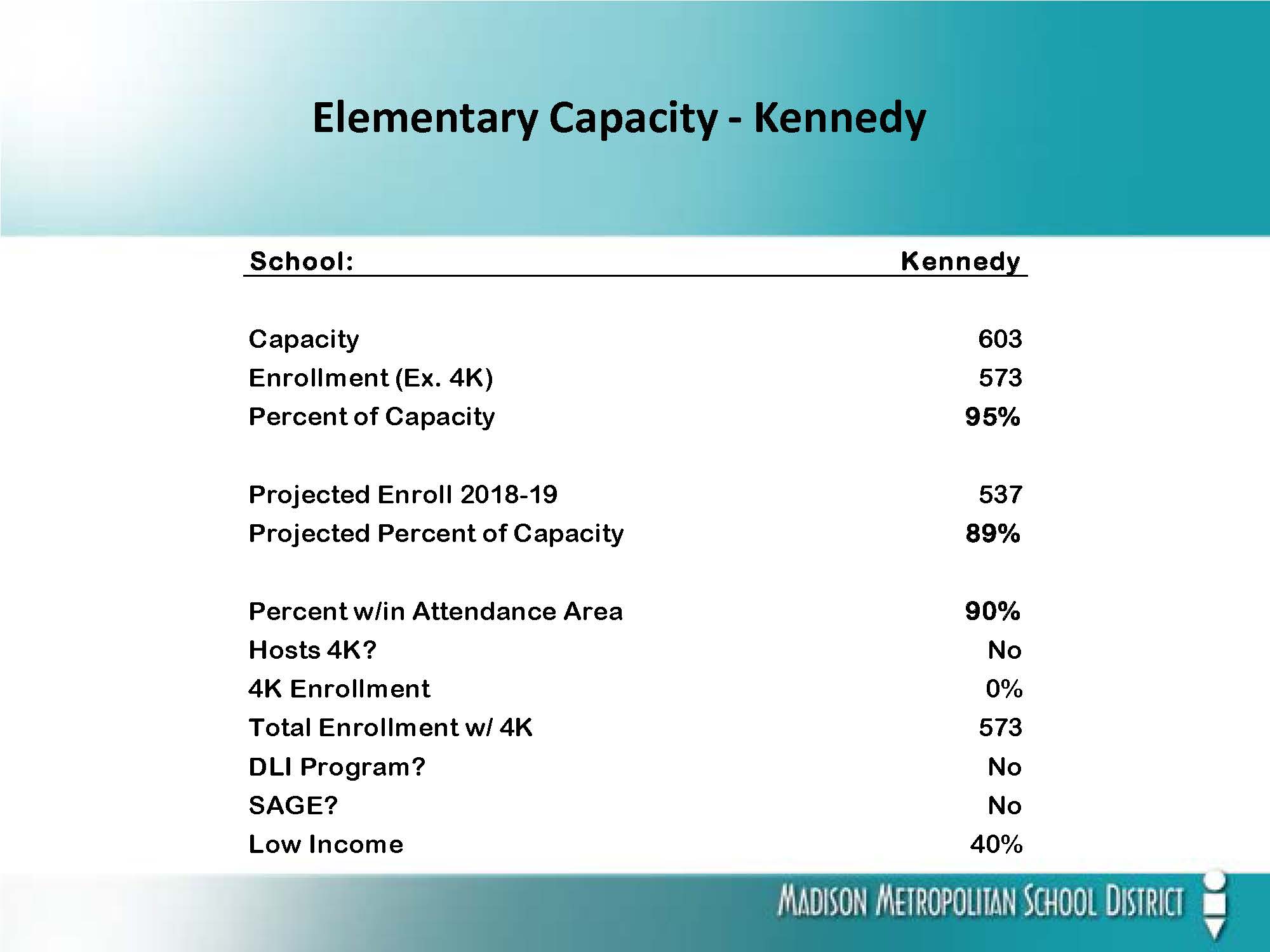
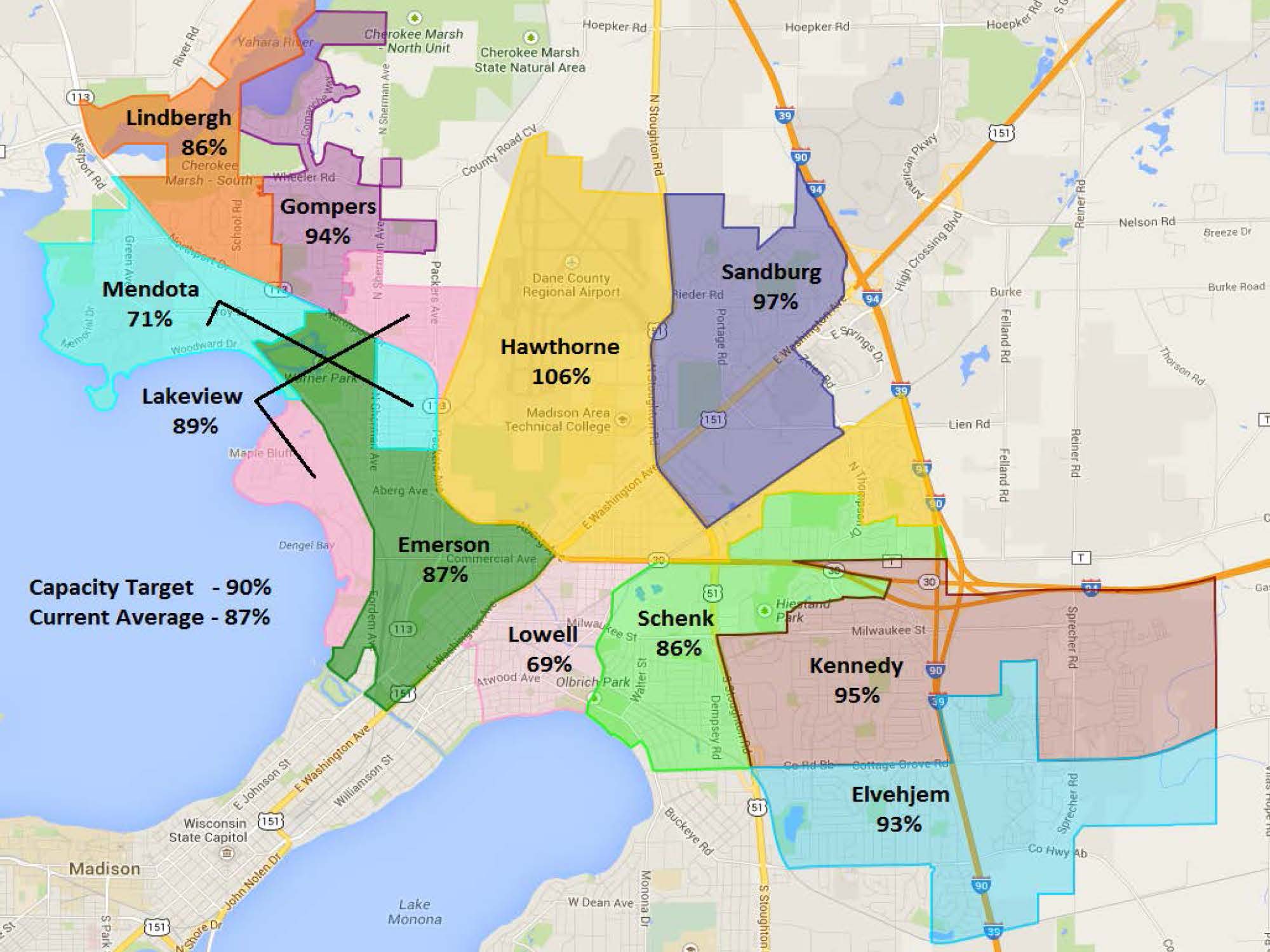
Share

Driving the Classroom with iTunes U

Frasier Speirs:

There was a time when iTunes U was just a section of the iTunes store where you could download audio and videos. Since Apple’s recent education event, that’s all changed. iTunes U is still a part of the iTunes Store but there’s now a dedicated iTunes U app for iOS devices.
The other major change to iTunes U was a policy change. iTunes U was previously only available to universities. At the January education event Eddy Cue stated that “starting today K-12 schools can sign up” to iTunes U. We didn’t get pre-announcement access but I signed up as soon as I could and Cedars has been accepted to iTunes U.

Share